GPT Image vs Midjourney: Which Fits Your Marketing Creative Workflow?
Evaluating gpt image vs midjourney for marketing creative workflows requires a close look at how each platform handles the gritty realities of campaign creation, integration, and iteration in enterprise ecosystems. For CMOs, creative directors, and digital asset managers, the right AI image generator must slot cleanly into established toolchains while balancing creative control, speed, and compliance. The following deep-dive guide appraises OpenAI GPT Image and Midjourney through every crucial practical lens, escalating beyond basic onboarding to highlight nuanced operational impact and emerging AI workflow consequences.
Define Your Marketing Image Tasks
True analysis of gpt image vs midjourney starts at defining the marketing task landscape these tools must serve. No two creative stacks are the same, and the specific context is where real friction — or fit — emerges.
- Brand Asset Creation:
- GPT Image supports dynamic banner ads, product shots, and integrated HTML creatives via prompt-based synthetic content. Built to operate within OpenAI’s SaaS paradigm, it focuses on text-guided generation, facilitating campaigns that require quick remixing of core references or copy-adherence for regulatory compliance.
- Midjourney follows a Discord-based workflow, ideal for high-concept, stylized visuals like hero headers, story illustrations, and social virality campaigns. Its image outputs often trend toward the artistic or surreal, suitable for campaign brainstorming or visual moodboards, but can lack the brand-locking rigor needed for heavily regulated sectors.
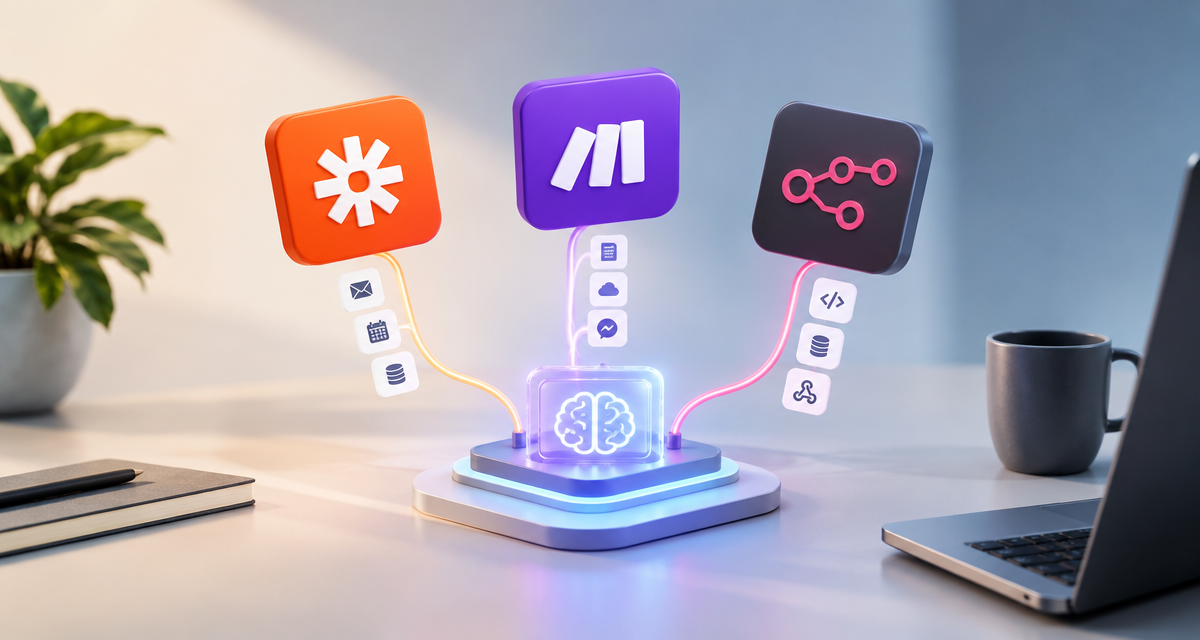
- Integration Required: Both tools face technical onboarding friction. GPT Image’s API sits well in Python-driven automations (Zapier, Make.com); Midjourney’s integration is often manual — grabbing Discord image links or relying on 3rd-party bot connectors. This difference rears up dramatically when scaling for omnichannel output.
Real-World Integration Challenges:
- Data Migration: Midjourney lacks streamlined import/export of creative asset libraries; teams must re-embed files or rely on Discord hosting. GPT Image provides better data structure with code hooks but can require substantial prompt tuning for consistent brand alignment.
- Onboarding Velocity: GPT Image’s interface is web-first; Midjourney’s Discord exclusivity alienates non-technical stakeholders who balk at Slack-like chat UX for core asset production.
Key Feature Teardowns (Daily Operations):
- Prompt Libraries: GPT Image encourages company-level prompt templates for repeatable asset generation. Midjourney relies on prompt memory but not versioning, complicating audit trails for compliance.
- Role Management: GPT Image has tokenized API keys for user access; Midjourney roles map to Discord permissions, requiring rigorous community management to avoid leaks.
Hidden Trade-offs: Choosing GPT Image’s structured, API-driven model boosts repeatability and compliance but limits how far you can push spontaneous creativity. Midjourney’s open-ended, ephemeral system inspires originality, but at the potential cost of consistency and oversight.
Future-Proofing: Next-gen automation frameworks are quickly bridging human/AI handoffs. Expect OpenAI and third parties to deepen integrations with Adobe Creative Cloud, DAMs, and CMS platforms. As Discord-based tools face growing enterprise pushback, expect a shift toward direct integrations and better administrative logging — a space where GPT Image already excels.
Compare Prompt Adherence
Prompt fidelity is everything for a sustainable creative workflow. Relying on prompt-based image generation can sharply impact campaign accuracy, creative satisfaction, and output reproducibility when comparing gpt image vs midjourney.
| Feature | GPT Image | Midjourney | Business Impact |
|---|---|---|---|
| Prompt Responsiveness | Highly literal; follows phrasing accuracy; best for strict briefs. | Interpretive; often infuses “style DNA” absent in original brief. | Agencies needing pixel-matched deliverables lean GPT; ideation teams pick Midjourney. |
| Prompt Variability | Consistent if prompts are cloned; risk of formulaic output. | Creative drift with each generation cycle; less repeatability. | Consistency vs. originality dilemma for recurring campaigns. |
| Prompt Reuse & Versioning | APIs enable templated prompts; vast logs; prompt chaining possible. | No official prompt library; external scripts needed for logs. | Audit/compliance easier on GPT stack; best for regulated brands. |
Technical Friction in Prompt Management:
- Midjourney: Discord chat interface offers none of the structured prompt history or query segmentation marketers expect; finding old prompts to reproduce a result can be near impossible for large campaigns.
- GPT Image: Exposes prompts via API logs or dashboard, allowing revision, approval, or direct import to workflow automator tools.
Hidden Trade-off: GPT Image’s prompt adherence ensures compliance but box-in creativity if not regularly re-tuned. Midjourney offers maximal creative latitude, but is unsuited for campaigns needing precise legal copy or CI brand colors every time.
Future-Proofing: Generative AI steering (using feedback loops to “anchor” creativity within brands) is emerging. Expect GPT Image to get more granular controls, like style sliders or forced brand palettes, while Midjourney’s trajectory is toward community-driven “style blends” (but still lacking true deterministic renderings).
Evaluate Text Rendering and Layout
The ability to generate marketing-ready text within images is a transformational promise of AI generators — yet also one of their biggest current weaknesses. Assessing gpt image vs midjourney on this front is pivotal for campaigns that include sell lines, disclaimers, or composite DTP content.
| Tool | Text Rendering Clarity | Layout Control | Font Matching | Best For |
|---|---|---|---|---|
| GPT Image | Above-average; can generate legible taglines, SOV ~85% | Basic overlays, not true DTP grid logic | Limited; approximates font “feel” but no font upload | Social cards, promotional banners, web assets |
| Midjourney | Poor; text rendered as blobs or pseudo-handwriting | No layout positioning, only rough “centered”/“left” hinting | Not supported | Visual moodboards, style references, non-text creative |
Technical Friction:
- GPT Image: Supports text generation as part of the image prompt, but lacks fine control — DTP grid logic or complex visual hierarchy must be post-applied via Figma, Photoshop, or custom HTML overlays. Integration with CMS is manual unless automated through API.
- Midjourney: All but unusable for text-centric deliverables; ignores or garbles input text prompts, leading to manual rework for campaign assets that require readable disclaimers, headlines, or CTA buttons.
Hidden Trade-offs: GPT Image’s ability to render usable copy within visuals is a timesaver for simple outputs but can encourage teams to settle for “AI-good-enough” typography, undermining professional design standards. In contrast, Midjourney forces downstream editing, delaying campaign launches but preserving full typographic control for designers.
Future-Proofing: Advanced multimodal routing and font embedding are on the horizon as OpenAI and competitors push toward true DTP-centric generative models. Watch for direct Adobe integration and proprietary font licensing models to emerge soon — which will likely benefit GPT Image’s ecosystem faster than Midjourney’s closed Discord workflow.
Assess Reference Image Fidelity
Reference image handling determines not only output realism but the ability of a platform to “inherit” brand assets, celebrity faces, or photo shoots. For enterprise marketing, the stakes in the gpt image vs midjourney debate are high — especially for verticals that need legal control or precise likeness reproduction.
| Platform | Image Upload & Conditioning | Fidelity to Source | Brand Asset Support | Legal/Compliance Considerations |
|---|---|---|---|---|
| GPT Image | Direct file uploads, prompt-linked reference injection | Good, recognizes logos, approximate facial likenesses | Usable for mockups, not retail-final outputs | Uses/retains assets in OpenAI cloud; strictest policies |
| Midjourney | Image prompts via Discord upload (URL); fuzzy reference linking | Very wide style drift; recognizable but often abstracted | Poor for vector logos or official imagery; best for style transfer | Staging environment, less legal governance, riskier for big brands |
Technical Friction:
- GPT Image: Upload via platform UI or API; synchronous “prompt + image” combos generate composite or variant visuals. Syncs with MAM/DAM via custom connectors, but lacks direct Photoshop PSD handling unless third-party tools are involved.
- Midjourney: Drag-and-drop to Discord or image URL insertion; loose anchor to prompt, resulting in unpredictable brand asset outcomes. Frequently needs post-processing or curation to extract legal-safe options.
Hidden Trade-offs: Midjourney’s loose fidelity makes it unsuitable for legal signoff on celebrity/digital twin campaigns, but invaluable for abstract “style-matching” — e.g., concept boards inspired by existing photos. GPT Image does better with direct likenesses but can err on the side of blandness, reducing creative surprise.
Future-Proofing: Expect OpenAI to unveil stronger compositional controls, enabling DAM-style tagging and asset embedding. Midjourney’s dependency on Discord limits its potential, but expect external “bridge” tools to emerge as demand grows for API-level referencing and better legal governance.
Compare Editing and Iteration Workflows
Iteration speed and creative revisioning are critical to the true productivity gains from deploying generative platforms. Here, the technical and practical separation between gpt image vs midjourney is sharp.
| Workflow Element | GPT Image | Midjourney |
|---|---|---|
| Core Revision Loop | Prompt modification, regeneration, optional image upload | Regeneration via “/v” variation or rerun prompt; no granular edit |
| Fine Editing | Minor mask inpainting/outpainting via API; limited direct brush tools | No direct editing; fully new generations needed for each change |
| Automation Triggers | Automate via API (e.g., regenerate every quarter, webhook delivery) | No native API; relies on low-level Discord bot integrations for triggers |
| User Collaboration | Access logs, collaborative rounds with prompt histories | All edits public in Discord, single-threaded conversation |
Technical Friction:
- GPT Image: Designed for iterative, prompt-tweak workflows. Directly supports API-looped refinement; easy to run A/B/C testing at scale and pull into reporting platforms. Weak for true layer-based Photoshop-style revisioning as of now.
- Midjourney: Iterative process is linear: hit “V” button for variations, or retype prompt. No memory of prior edits. All edits public unless Discord privacy boosted — an issue in agency/multi-client work involving embargoed assets.
Hidden Trade-offs: GPT Image’s workflow encourages “test and tune,” but teams may quickly plateau and settle for median results. Midjourney’s lottery-like results can reward patience, but make targeted reworks or batch output nearly impossible — and confidential work can be compromised through misconfiguration.
Future-Proofing: Next-gen “interactive canvas” UI is inevitable for both; expect object selection, region-based inpainting, and feedback-driven iteration inside both platforms. Watch for live Figma or Google Drive sync in GPT pipelines; Midjourney may see premium Discord bots that enable semi-private, multi-user edit chains.
Review Commercial Terms and Costs
For line items in marketing budgets, the delta between gpt image vs midjourney emerges most obviously in price structures, usage caps, and legal/enterprise frameworks. Small agencies may find either approachable, but scale and compliance headaches grow quickly beyond single-seat freelance use.
| Factor | GPT Image | Midjourney |
|---|---|---|
| Pricing | $20/month (standard ChatGPT Plus) or API: ~$0.016/image for large volume | $10–$60/month (tiers); Enterprise plans request-only |
| Output Limits | Soft-limited by API usage; bursts allowed, then hard-capped | Relative output cap per tier (e.g., 200–1,800 images/mo) |
| License & Commercial Use | Permitted under OpenAI TOS; review for legal or adult content use | Commercial use OK; no indemnity for misuse or likeness violations |
| Support | Dedicated enterprise support with uptime guarantees at scale | Community-based support; custom terms limited to enterprise |
| Integration Alignment | Designed for SaaS & workflow stack integration | Discord-centric, not natively API accessible |
- GPT Image: Predictable, scalable pricing, prioritizing volume API users. Early enterprise accounts will see the most value in support responsiveness and legal clarity.
- Midjourney: Flat-rate “credits per month” can bottleneck heavy iterative workflows; Discord lock-in makes it hard to do legal or compliance-driven pipeline work without extensive policy reviews and custom contracts.
Hidden Trade-offs: GPT Image’s billed-per-output model controls runaway costs, but can cause unexpected spikes if not metered or budgeted. Midjourney’s flat tiers appeal to freelancers or small studios but slow productivity in high-volume use cases. Both require careful contract vetting for regulated industries.
Future-Proofing: As enterprise clients demand bulk agreements, expect API-first, license-locked “brand-safe” modules to roll out for OpenAI. Discord-first ecosystems (Midjourney) risk being leapfrogged if critical business clients push too hard for classic SaaS SLAs and legal indemnity.
Choose by Task and Production Needs
Choosing between gpt image vs midjourney is ultimately a decision grounded in the realities of your marketing operations, creative requirements, and production infrastructure. Small, agile content teams hungry for experimentation may tolerate (or embrace) Midjourney’s creative unpredictability. Large, process-driven brands may gravitate toward GPT Image’s API accessibility, structured workflows, and integration potential.
The best choice depends less on which platform produces the most impressive individual image and more on which one consistently delivers usable assets within your existing production process.
When GPT Image Is the Better Fit:
- High-Volume Campaign Production: Marketing teams producing dozens of ad variations, localized assets, or product visuals can benefit from API-driven generation and repeatable prompt templates.
- Brand-Guided Creative Work: Organizations working with established visual guidelines may prefer GPT Image’s relatively strong prompt adherence, particularly when instructions specify composition, colors, messaging, and reference materials.
- Automated Content Pipelines: Teams using Make, Zapier, or custom scripts can integrate GPT Image generation into workflows involving content creation, asset storage, approvals, and CMS publishing.
- Text-Heavy Marketing Assets: When promotional graphics require headlines, product labels, or short promotional messages, GPT Image may reduce the amount of manual correction needed.
- Iterative Campaign Optimization: Performance marketers can generate variations of a concept, compare results, and use campaign insights to inform subsequent creative briefs.
When Midjourney Is the Better Fit:
- Concept Development and Moodboarding: Creative teams exploring campaign directions, visual themes, or unconventional compositions may benefit from Midjourney’s interpretive approach.
- Editorial and Brand Storytelling: Midjourney can be particularly useful for atmospheric hero images, conceptual illustrations, and visually distinctive brand narratives.
- Exploratory Creative Work: When the objective is to discover unexpected visual possibilities rather than reproduce a tightly defined layout, Midjourney’s stylistic variability can become an advantage.
- Small Creative Teams: Designers and content creators who prefer interactive visual exploration over API-driven production may find Midjourney suitable for their workflows.
- Projects With Flexible Visual Requirements: Campaigns without strict product accuracy, typography, or layout constraints can make greater use of Midjourney’s artistic interpretation.
Compare the Tools Against Your Actual Workflow
Before committing to either platform, run a controlled production test using the same set of marketing briefs.
| Evaluation Area | What to Test | Success Indicator |
|---|---|---|
| Prompt Accuracy | Generate images from detailed creative briefs | Fewer deviations from required elements |
| Brand Consistency | Repeat a campaign concept across multiple assets | Consistent visual identity |
| Production Speed | Measure briefing, generation, and revision time | Lower total time per approved asset |
| Text Rendering | Generate graphics containing short promotional copy | Less manual typography correction |
| Creative Originality | Produce alternative campaign concepts | Greater diversity of usable directions |
| Workflow Integration | Move generated assets into existing marketing tools | Fewer manual handoffs |
| Cost Efficiency | Track generation, revisions, and editing expenses | Lower cost per approved asset |
| Approval Readiness | Submit outputs for stakeholder review | Higher first-round approval rates |
The most revealing metric is not generation speed alone. It is cost per approved, production-ready asset.
An image generated in 20 seconds offers limited operational value if it requires 40 minutes of corrections. Conversely, a more exploratory creative process may justify additional time when the resulting concept provides stronger differentiation or campaign impact.
Consider a Hybrid Creative Workflow
For many marketing teams, the decision does not have to be exclusively GPT Image or Midjourney.
A hybrid approach can assign each platform to the production stage where it provides the greatest value.
Stage 1: Creative Exploration
Use Midjourney to develop visual concepts, moodboards, campaign themes, and alternative artistic directions. Evaluate these against brand positioning and audience expectations.
Stage 2: Structured Asset Production
Use GPT Image to generate campaign variations from approved creative briefs, especially where specific composition, messaging, or product requirements matter.
Stage 3: Professional Refinement
Move selected outputs into design software for final typography, exact brand colors, layout adjustments, accessibility checks, and production formatting.
Stage 4: Distribution and Performance Analysis
Publish approved assets across marketing channels and track performance metrics such as engagement, click-through rate, conversion rate, and creative fatigue.
Stage 5: Continuous Improvement
Use campaign results to refine future prompts, creative guidelines, and platform selection.
This division of responsibilities reduces dependence on a single tool while allowing marketing teams to build repeatable processes around each platform’s strengths.
However, a hybrid workflow also introduces additional subscriptions, asset transfers, and governance requirements. Teams should adopt it only when the creative benefits outweigh the operational complexity.
Final Verdict: GPT Image vs Midjourney for Marketing Teams
The gpt image vs midjourney comparison ultimately comes down to two different priorities: structured production and creative exploration.
GPT Image is generally the stronger starting point for marketing teams prioritizing repeatability, prompt adherence, API integration, and automated asset generation. Its capabilities align particularly well with performance marketing operations, where creative variations must be produced efficiently and tested systematically.
Midjourney remains compelling for teams prioritizing artistic direction, visual experimentation, and distinctive editorial imagery. Its value is particularly apparent during conceptual development, when unexpected creative interpretations can help campaigns stand apart.
Neither platform eliminates the need for human creative judgment, quality assurance, or brand governance. Both can produce technically impressive images that fail to meet a campaign’s actual business requirements.
For organizations evaluating these tools, the most practical approach is to select a representative group of creative briefs, test both platforms under comparable conditions, and measure the complete journey from initial prompt to approved asset.
The best AI image generator is not necessarily the one that creates the most beautiful image. It is the one that helps your team consistently produce effective, brand-appropriate marketing assets with the least unnecessary friction.