Endpoint Security Vendors in Singapore: Who Will Manage the Response?
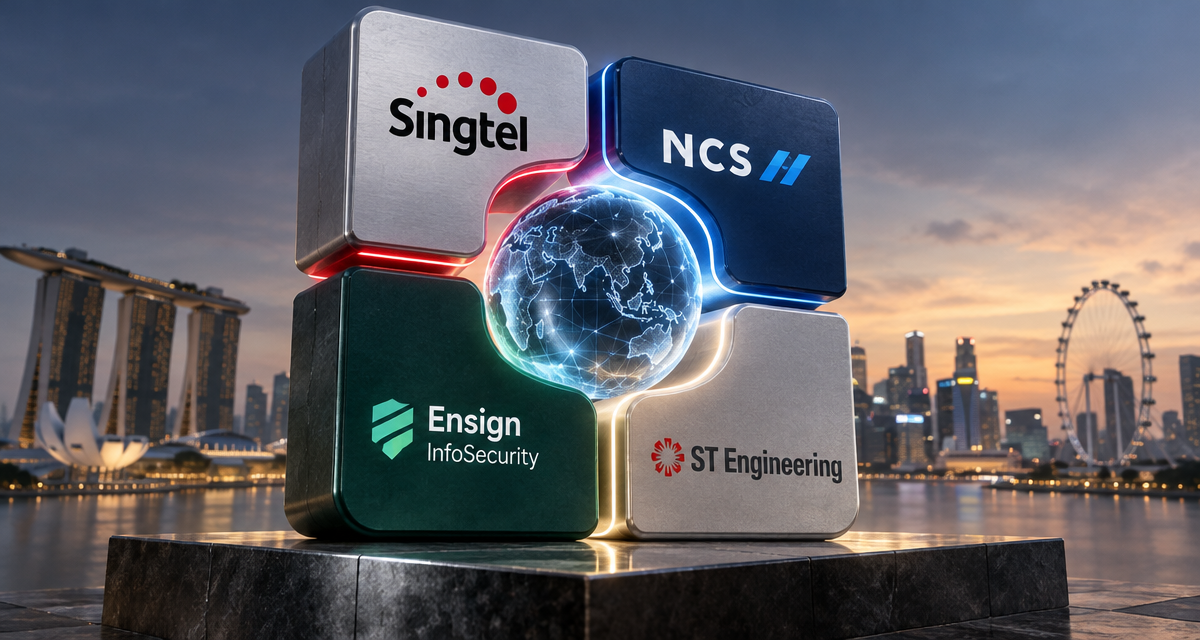
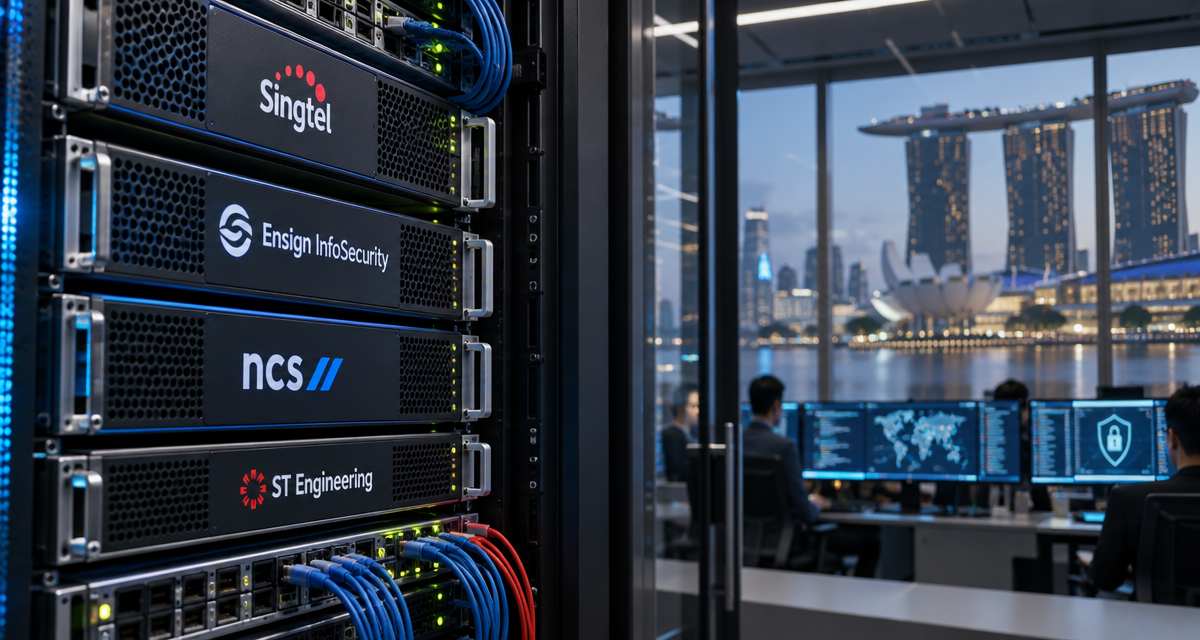
When evaluating endpoint security vendors in Singapore, organisations—especially SMEs—need to look beyond surface-level protection. The platform must not just defend the business but also integrate thoroughly across diverse device fleets, deliver actionable incident response, and provide local escalation paths. This guide exhaustively analyses top-tier solution providers, including Singtel, Ensign InfoSecurity, NCS, and ST Engineering, comparing their device coverage, operational fit, and managed response depth for Singapore’s enterprises. Here, “Who will manage the response?” is not just about SLAs—it’s about daily realities, long-term viability, and the true cost of vendor partnership.
Define Endpoint Security Requirements for SMEs
The endpoint security requirements for SMEs in Singapore are fundamentally shaped by constraints in IT budget, resource allocation, and skills availability. While solution breadth is valuable, SMEs will only realise ROI from endpoint security vendors in Singapore if the offers match their device landscape—frequently a hybrid mix of Windows desktops, MacBooks, mobile BYOD, and emerging IoT assets. Here are some things to keep in mind:
- Most SMEs operate without in-house SIEM or centralized AD, relying on cloud services like Microsoft 365 or Google Workspace. Endpoint platforms that demand on-prem API integration, complex agent deployment, or manual update flows (e.g., through legacy GPO) will face onboarding roadblocks. Mobile device management (MDM) integration is often “claimed,” but actual zero-touch deployment speed varies wildly between vendors.
- Endpoint vendors now pitch AI-powered threat detection, but in practice automated containment, real-time dashboard alerts, and remote device wipe are core features that drive day-to-day value. SMEs typically require role-based dashboards, enabling office managers to visualize endpoint health without exposing tuning controls that could lead to accidental misconfiguration.
- Simpler “all-in-one” platforms (e.g., packaged by telecoms) often restrict advanced response scripting—meaning SMEs trade flexibility for the comfort of limited management options and bundled telco support. Highly modular, raw security suites offer more granularity but demand IT sophistication most SMEs lack.
- Over the next 12–24 months, expect AI-driven response automation to become baseline. All endpoint security vendors in Singapore will increasingly be judged on their ability to link real-time threat intelligence into local response workflows. Platform extensibility—especially integration with SaaS business tools—is set to be a key differentiator as Singapore SMEs continue their cloud migration journeys.
Distinguish Software Resellers From Managed Security Providers
Understanding the clear line between software resellers and managed security service providers (MSSPs) is mission-critical for Singaporean SMEs choosing endpoint security vendors. A simple license sale is not remotely equivalent to ongoing managed protection.
Resellers generally supply only initial onboarding scripts and basic access to the vendor portal. Any API integration (e.g., with Slack for alerting or Splunk for SIEM handoff) must be managed in-house. MSSPs, by contrast, maintain active connections to client endpoints, often using their own secure management tunnels, and will tune integrations to existing workflows—though this often requires relinquishing some admin access to the provider.
Resellers can offer multi-vendor portfolios, but hands-on configuration support ends at installation. Managed providers deliver 24/7 threat monitoring, personalised escalation runsheets, and “runbooks” for containment actions, often surfaced through customer-specific dashboards. For example, an MSSP’s incident feed might allow direct remote device isolation, while a reseller’s limited service stops at email notifications.
Partnering with a MSSP improves coverage and buy-in, but may lock the business into provider-defined playbooks, outbound support dependencies, and higher per-device costs. Pure resellers give full configuration ownership but little support if something breaks during a breach event—often a fatal issue for organisations with lean IT teams.
As endpoint platforms incorporate more machine learning-driven incident triage, MSSPs in Singapore are beginning to offer “co-managed SOC” models—where vendor teams and customer engineers jointly handle escalations. Expect this to become standard as AI can automate more first-line response actions without customer intervention.
Evaluate Each Vendor Against Your Device Environment
When selecting among endpoint security vendors in Singapore, device environment fit is the non-negotiable test. Solutions can vary massively in how well they detect, protect, and remediate across desktops, mobile, Mac, Linux, and IoT. A look at major vendors:
| Vendor | Primary Endpoint Coverage | Supported OS/Platforms | BYOD Coverage | Cloud SaaS/App Coverage | Device Fleet Size Target | Best For |
|---|---|---|---|---|---|---|
| Singtel | Comprehensive desktops/laptops, mobile | Windows, Mac, Android, iOS | Partial (needs MDM add-ons) | Integrates with O365/Google apps | 50–5,000 endpoints | Telco-centric, multi-location SME/enterprise |
| Ensign InfoSecurity | Enterprise-grade, all endpoint types | Windows, Mac, Linux, IoT | Granular MDM/EMM support | Cloud & on-prem app coverage (API-based) | 100–10,000+ endpoints | Banks, Gov, regulated verticals |
| NCS | Flexible—custom device onboarding | Win/Mac, niche legacy, IoT | Supports remote onboarding | Custom API integrations | 100–5000 endpoints | Midsize/high compliance firms |
| ST Engineering | Critical infrastructure/industrial endpoint focus | Windows, legacy industrial OS, Linux | Limited (MDM available at premium cost) | Selective cloud integrations | 500–50,000 endpoints | Utilities, manufacturing, government |
Windows agent deployment is never frictionless; remote onboarding often requires scripting that many vendors do not fully automate. MacOS M1/M2 compatibility remains a hot spot—many legacy endpoint agents still lack reliable compatibility. Mobile protection frequently depends on integrating third-party MDM platforms, adding complexity and time to enforce real-time policies across BYOD populations.
High-tier platforms like Ensign expose granular device timelines for post-breach forensics, automated rollback on suspicious applications, and can trigger API calls to external systems (such as HR or facilities) based on endpoint geo-location anomalies. Mid-tier telecom solutions provide summary dashboards, but often lack granular, per-device policy control and full API event export to your SIEM.
The broader the platform’s coverage (e.g., including industrial control systems via ST Engineering), the more likely you will sacrifice ease of use, speed of onboarding, and clear dashboarding. Simpler UIs come at the expense of deep tuning—especially for SME IT leads who want “set-and-forget” policies.
As SMEs onboard more cloud SaaS, demand for endpoint platforms that can enforce context-aware access (device risk posture tied to SaaS logins) will surge. AI-driven risk-based policy enforcement will shift endpoint protections from static device checks to dynamic, user-centric controls—vendors who don’t open API for custom business logic will fast become obsolete.
Verify Endpoint Platform Partnerships and Coverage
True enterprise-grade endpoint security requires partners who can “fill the gaps”—covering OS updates, patch delivery, threat intelligence, and advanced analytics. The Singapore market is defined by tight vendor partnerships, particularly among Singtel, Ensign InfoSecurity, NCS, and ST Engineering.
Not all security vendors have equal integration depth with Microsoft Defender, CrowdStrike, SentinelOne, or other advanced platforms. “Partnership” often just means preferred pricing or reseller status—actual single-pane-of-glass monitoring is rare. SME adopters should directly validate whether their chosen vendor can merge alerts, policy management, and reporting from all device types in a unified dashboard—especially for hybrid environments where legacy endpoints persist.
Partnership-backed platforms often provide shared threat intelligence feeds, automatic patch validity checks across OS, and prioritized vulnerability scanning. The best platforms expose “consolidated alert timelines”—showing correlated cross-platform events, e.g., a lateral movement attempt from an unmanaged device flagged by both the endpoint agent and the partner SIEM.
Exclusive vendor partnerships can lock your business into preferred ecosystems. For example, Singtel’s platform might prioritise integrations with Microsoft, but have weaker tie-ins with Apple MDM or Google Workspace. You gain ease of procurement, but lose best-of-breed modularity. This risk is acute for SMEs straddling older Windows devices and new MacBooks in a dual-fleet scenario.
Look for vendors investing in API-first partnerships—not just marketing alignments. AI-powered threat enrichment, automated policy propagation, and federated analytics will depend on deep, dynamic partnership models—not static alliances. In 12–24 months, endpoint vendors in Singapore unable to automate cross-platform event correlation using open APIs will fall behind.
Compare Monitoring and Incident Response Responsibilities
Of all selection criteria, incident response is the real differentiator among endpoint security vendors in Singapore. Businesses must know: Who actually “owns” threat monitoring and remediation—the vendor, your MSP, or your own IT lead?
| Vendor | 24/7 Monitoring | Incident Response SLA | Response Actions | Automation Level | User-Controlled Overrides |
|---|---|---|---|---|---|
| Singtel | Standard business hours, 24/7 upgrade | 4–8 hours (priority on major breach) | Device quarantine, basic rollback | Preconfigured playbooks, limited custom rules | Yes—overrides through dashboard, but limited deep policy editing |
| Ensign InfoSecurity | Full 24/7/365 | 1 hour for critical events | Custom runbooks, deep forensic support, legal escalation | Extensive—AI/ML-powered triage, custom scripting | Available, but advanced policies only with co-managed plan |
| NCS | Business hours, emergency 24/7 on request | 2–6 hours | Containment, forensic imaging (add-on) | Moderate—mainly fixed workflows | Admin override possible, granular role-based access |
| ST Engineering | 24/7 for critical customers, standard otherwise | 2–4 hours | Advanced ICS/OT incident playbooks | Integrated, but with high manual SOC input | OT overrides require additional licensing/support packages |
Few platforms support full “push-button” incident response. Even with 24/7 managed SOC, business users may face lags in securing devices due to hard-coded escalation flows (e.g., requiring C-suite approval for remote wipe). SME-focused vendors often depend on standardized playbooks, limiting flexibility to handle nuanced local threats.
Best-in-class platforms empower SMEs with custom alerting policies (e.g., mobile device location anomaly triggers automatic isolation) and provide plain-English reporting on every action taken during an incident response run. Automated forensic collection, available in Ensign’s top tier, gives SMEs the auditability required for insurance and regulatory reporting, but only if purchased as a premium add-on.
Businesses opting for telco bundles get simple dashboards but may face “black box” incident runbooks—minimal situational transparency versus deeply configurable, but more complex, enterprise MSSPs.
AI-driven incident triage is fast advancing, enabling “first touch” response (blocking, rollback) with minimal human review. Within 2 years, expect fully automated incident recovery workflows to be standard, at least for tier 1 malware, though heavily regulated sectors will always require human sign-off for major actions.
Assess Local Support and Escalation Arrangements
Local support is a defining issue for endpoint security vendors in Singapore—especially for compliance-driven or operationally critical SMEs who must meet PDPA or sectoral guidelines. Service-level variances are material, and direct escalation into Singapore-based engineers is a real differentiator.
Vendor support is often routed offshore unless explicitly specified in the contract. Singapore-based SOCs exist only at the higher price bands—lower-cost, “global” packages see support routed through APAC hubs, with possible delays on public holidays or weekends.
Vendors with local presence (e.g., Singtel, Ensign) can supply on-site diagnostics, root-cause workshops, and forensic hardware swaps in hours—capabilities unavailable with pure software resellers. Dashboard ticketing enables priority push to named account managers, while advanced tiers integrate support escalation directly into incident workflow, triggering direct engineer callbacks.
Local escalation guarantees come with premium pricing and sometimes minimum volume requirements. Budget-tier support (email/ticket only) is transactional; complex events that need physical device handling or legal advisory can incur significant unplanned costs.
With AI support bots improving, basic troubleshooting may be increasingly handled automatically—even for incident response routines. However, regulatory and legal escalation will forever require humans familiar with Singapore’s compliance frameworks.
Calculate Deployment and Ongoing Service Costs
Cost analytics must factor not just mean per-device pricing, but onboarding effort, overhead, and the realistic add-ons necessary for sustained security from endpoint security vendors in Singapore.
Zero-touch” onboarding is rare—SMEs should budget for at least 2–8 hours onboarding per 50 devices, particularly with mixed Windows and Mac fleets. API connectors for SIEM or cloud HR system integration are often quoted extra, as is policy migration from legacy desktop antivirus.
Typical baseline licenses include standard endpoint agent, cloud dashboard, and regular signature updates. Add-ons—such as advanced forensic recovery, 24/7 SOC, or mobile device coverage—influence the true TCO. Ongoing costs must factor device churn (offboarding, re-provisioning), platform upgrades, and user support calls, which are billed hourly by some providers.
Most “low-cost” packages sacrifice local, phone-based support, and revert to email-only with SLA measured in business days. Add-on costs for advanced response, geo-fencing, or forensic features can escalate total spend to double (or more) the sticker per-user price, especially if your environment pivots from “default allow” to “zero trust” posture mid-contract.
As Singaporean regulators increase breach-reporting requirements, expect compliance modules and incident documentation to become mandatory cost lines. AI-driven features, especially auto-remediation and advanced analytics, are premium-priced today, but may become de facto inclusions within 24 months as market competition increases.
| Vendor | Per User/Device (SGD/month) | Year 1 Onboarding Fees | 24/7 Response Add-on | Compliance/Forensic Add-ons | Key Cost Takeaway |
|---|---|---|---|---|---|
| Singtel | 8–15 | From $1,500 | $5–10/device | $2+/device | Local support premium, lower TCO for >100 devices |
| Ensign InfoSecurity | 12–25 | $3,000–$6,000+ | Incl. with enterprise bundle | Negotiable (case basis) | Top-tier feature set but price scales rapidly |
| NCS | 10–18 | $2,000+ | Add-on only | $3–$5/device | Cost-effective for hybrid environments |
| ST Engineering | 12–30 | $2,500–$10,000+ | Negotiable | High for ICS/OT features | Expensive for smaller non-industrial fleets |
Build a Vendor Shortlist and Pilot Plan
With all variables surfaced, the prudent move is to shortlist endpoint security vendors in Singapore based on operational fit, not just brochure features and cost. SMEs should:
- Define pilot objectives: Prioritise device onboarding speed, dashboard usability, and real-world incident automation.
- Demand a focused POC: Each considered vendor should be required to deploy to a sample device cohort (Windows, Mac, mobile, BYOD) and simulate an incident escalation sequence within 14 days.
- Measure cross-functional workflows: Audit how quickly non-IT stakeholders (e.g., HR, Ops) can receive situational awareness, trigger isolation, or access device health metrics with minimal training.
- Benchmark against operational support: Include “escalation drills”—verify 24/7 support response time, language fluency, and Singapore-based engineer escalation. Document if, and how, automated AI response actually works under real threat conditions.
- Technical Friction: Expect device and OS compatibility to be the first pilot pitfall—budget time for troubleshooting basic agent deployment.
- Feature Teardown: Test real-time dashboarding, custom alerting, and evidence collection on at least 10% of device estate.
- Hidden Trade-Offs: The slickest demo may mask feature depth or incident runbook transparency under pressure—insist on full test documentation.
- Future-Proofing: Assess vendor roadmap; prioritise those investing in AI-fueled automation and open API ecosystem development to ensure platform relevancy over the next renewal horizon.
Summary: Key Comparison Table
| Vendor | Enterprise Coverage | Managed Response Ownership | Local Singapore Support | Annual Cost per 100 Endpoints (SGD) | AI/Automation Readiness |
|---|---|---|---|---|---|
| Singtel | Broad, with telco focus | Shared with customer for basic; full managed tier available | Yes (priority) | $9,600–$18,000 | Moderate, depends on bundle |
| Ensign InfoSecurity | Comprehensive, highly regulated sector focus | Full managed ownership | Yes (premium) | $14,400–$30,000 | High—AI/ML included in most cases |
| NCS | Flexible, custom hybrid fleets | Shared (co-managed on request) | Available with add-on | $12,000–$21,600 | Moderate to High, based on enterprise add-ons |
| ST Engineering | Industrial/critical only | Managed SOC only at premium | Yes (enterprise/critical contracts) | $14,400–$36,000 | Advanced for OT, less so for general endpoints |
Ultimately, the optimal endpoint security partner for a Singapore SME balances coverage, operational control, response transparency and sustainable TCO—while demonstrating roadmap commitment to AI-driven security automation and flexible API workflows.
Compare endpoint security vendors in Singapore by device coverage, managed response, local support and service costs before shortlisting.