What Google Released on 12 November
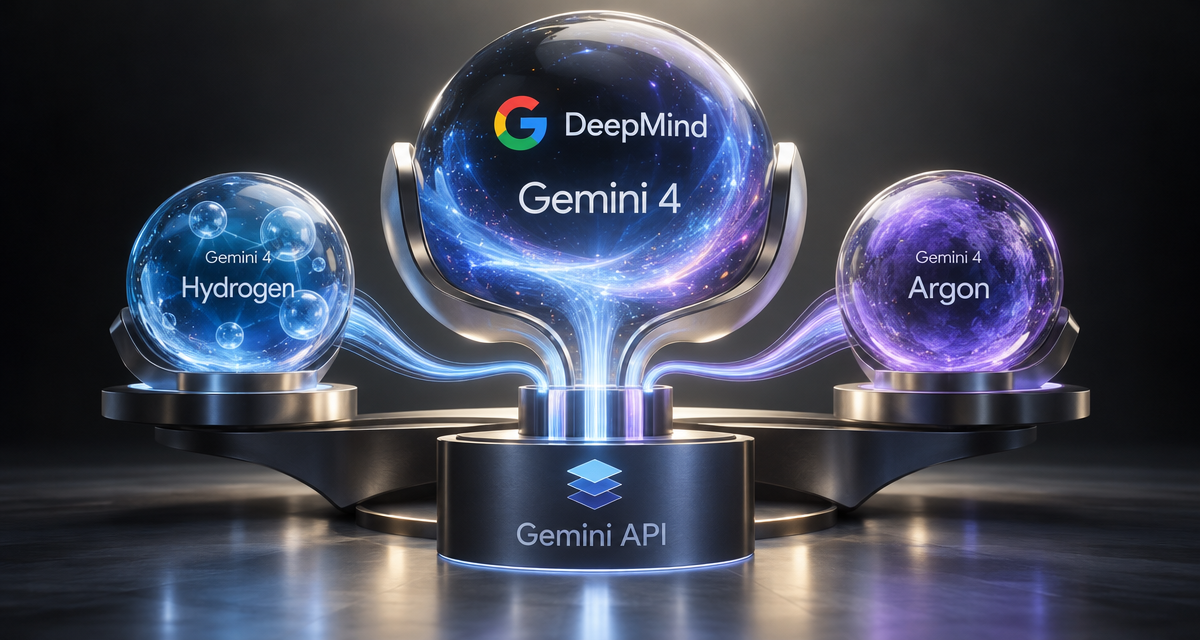
On November 12, Google DeepMind formally unveiled Gemini 4 Hydrogen—a new tiered model in their Gemini 4 family designed for business-class AI workflows demanding higher output speeds and robust cost control. This marks a deliberate response to enterprises seeking more granular, production-grade AI orchestration. Gemini 4 Hydrogen, alongside Argon and Carbon, now anchors Google’s multi-layered LLM delivery strategy, prioritizing horizontal scalability and contextual task tuning over monolithic, general-purpose deployments.
The Hydrogen release slots into Google’s wider strategy for modular, API-driven generative AI across the Google Cloud Platform and user-facing toolkits like AI Studio. It promises improved throughput for tasks such as large-batch data extraction, summarization, code analysis, and high-frequency content scoring, balancing efficiency against the premium reasoning abilities of higher-end Gemini variants. According to Google, Gemini 4 Hydrogen will be available out-of-the-box via the Gemini API, and integrated into managed offerings like Gemini for Workspace and Vertex AI.
Crucially, this launch is less about one-upping rivals and more about diversifying LLM economics. Google is presenting the Hydrogen model as an operational middle ground: it’s intended for workloads intensive enough to outstrip smaller models (like Gemini Nano or legacy PaLM), but not so complex that they justify the costs of flagship large-context models like Gemini 4 Ultra or Argon.
- API Access: Gemini 4 Hydrogen endpoints are directly accessible to developers, easing migration from proprietary OpenAI or Anthropic APIs.
- Tooling Integration: Support in AI Studio and Business APIs is immediate, with managed security and tenant segregation for enterprises.
- Deployment Focus: Tailored for document intelligence, customer support automation, and code review pipelines needing rapid turnaround with predictable P95 response latency.
This release signals Google’s intent to operationalize AI at enterprise scale—not merely in research settings but in production data workflows, where cost, latency, and deployment transparency become non-negotiable factors.
Where Hydrogen Fits Alongside Argon and Carbon
Positioning of Gemini 4 Hydrogen within the Gemini portfolio reflects Google’s bid for functional granularity, not just bigger-better-faster posturing. At launch, Gemini 4 Hydrogen sits between the flagship Argon and entry-level Carbon variants. Understanding these distinctions is essential for engineering teams scoping migrations, procurement teams rationalizing licensing, and architects optimizing LLM orchestration per use case.
| Model | Positioning | Primary Use Cases | Context Window | Reasoning Capability | Throughput Speed | Best For Team Size |
|---|---|---|---|---|---|---|
| Gemini 4 Argon | Apex (Advanced) | Complex reasoning, semantic search, advanced code analysis | Up to ~1M tokens | Very High | Moderate | Large enterprise, R&D, regulated workloads |
| Gemini 4 Hydrogen | Performance-Balanced | Bulk data extraction, summarization, batch automation, regular code review | Up to 256K–512K tokens | Medium-High | High | Business units, mid-large orgs, cost-aware teams |
| Gemini 4 Carbon | Entry-Efficient | Chatbots, document parsing, lightweight text tasks | Up to 128K tokens | Medium | Very High | SMBs, startups, trials/pilots |
Hydrogen’s unique value proposition: It provides substantial speed increases over Argon (especially for high-volume, moderately complex operations) while offering more nuanced reasoning than Carbon—at a price point that is manageable for continuous batch jobs and daily process automation across multiple teams.
- Compatibility and Orchestration: Hydrogen shares configuration and API schema with Argon and Carbon, simplifying multi-tenant LLM rollouts within a single organization.
- Hidden Trade-Off: You sacrifice the most advanced reasoning (e.g., long-context chain-of-thought, intricate code remediation) that Argon excels at, in exchange for a material drop in inference latency and operating cost.
For decision-makers, Hydrogen’s selection is rarely about absolute top-end capability—it’s about what’s “good enough” for 80% of enterprise automation, with predictable cost, speed, and vendor lock-in considerations in mind.
Which Tools Offer Access
Google has prioritized broad accessibility for its Gemini 4 Hydrogen model, reflecting a focus on driving adoption among both technical and business users. Key integration channels include:
- Gemini API: Hydrogen endpoints are deployable via RESTful calls, with comprehensive SDK support (Python, Node.js, Java, Go) and unified authentication with other Google Cloud resources.
- AI Studio: Rapid prototyping is available directly within Google’s browser-based development environment, including data import/export, prompt engineering sandboxes, and hands-on inference validation.
- Vertex AI: Full support means enterprises can productionize Hydrogen models within complex MLOps pipelines—leveraging model monitoring, versioning, feature store integration, and secure Enterprise Identity support.
- Google Workspace (Gemini for Workspace): Hydrogen models are being selectively rolled into high-throughput document, email, and spreadsheet enhancements, primarily for high-volume business tiers.
For solution architects and DevOps leads, practical friction points revolve around:
- API Quotas: Early whitelisting phases can limit throughput; sustained usage requires quota increases which, in Google’s ecosystem, often require dialog with your account rep.
- Authentication and IAM: Google-standard OAuth is required for API/AI Studio and often necessitates additional scope approvals for enterprise-grade automation scripts.
- Data Residency & Compliance: Workflow onboarding across regulated industries (healthcare, financial services) requires reviewing data storage transience and persistent logging policies within Gemini integrations, as residency options can differ across Google’s platforms.
- Migrating from OpenAI/Anthropic: Schema adaptation is manageable due to similar prompt and completion syntax, but beware subtle differences in token limits, rate limiting, and conversational state preservation.
For businesses, leveraging Gemini 4 Hydrogen via these tools is increasingly a function of centralizing MLOps practices—using Vertex AI for production, AI Studio for prototyping, and direct API access for internal tool augmentation, all underpinned by Google’s security stack.
What Google Claims About Speed and Efficiency
Google positions Gemini 4 Hydrogen as the high-velocity workhorse model in its lineup, emphasizing a balance between throughput and sufficiently advanced reasoning. The company claims significant reductions in per-inference latency and greater cost efficiency per task compared to Argon—particularly for workflows not requiring the highest-complexity outputs.
- Latency: Google reports up to 40% lower median response times on standardized summarization and extraction tasks versus Argon.
- Token Processing Rate: Bulk API jobs (e.g., processing 10,000+ documents per hour) see substantial P95 completion time drops, making Hydrogen viable for batch-automation and real-time scoring loops.
- Cost Efficiency: Hydrogen is priced below Argon, typically at a 25–35% discount per million tokens processed (precise numbers are region- and tier-dependent).
- Power Consumption: Google claims higher server density and better thermal efficiency at the hardware layer when deploying Hydrogen in Google’s cloud regions, marginally improving green/ESG metrics per enterprise rollout.
Technical complexities and caveats:
- Benchmarks provided by Google use internal workloads. Actual results may diverge due to prompt engineering, input diversity, or downstream integration bottlenecks (e.g., outbound webhook delays, IAM-induced throttling).
- Speed increases are most pronounced for tasks with short-to-medium context length. As prompts approach Hydrogen’s upper context window, response latency and cost penalties start to approach Argon’s.
- Efficiency gains are maximized when the model is run in parallel batch mode versus highly interactive, single-request sessions.
- Hydrogen’s “speed” edge disappears for niche, chain-of-thought reasoning tasks where Argon or bespoke tuned LLMs still have an advantage.
Adopting teams need to closely monitor not just Google’s cloud console-reported metrics but also their own completion rates downstream—checking for efficiency losses due to frequent prompt restarts, context window truncation, or reconciliation logic in orchestration layers.
Which Business Workflows Are Worth Testing
For line-of-business, IT, and analytics leaders, the decision to evaluate Gemini 4 Hydrogen hinges on the model’s ability to accelerate repetitive, process-driven tasks at a defensible cost per outcome. It offers the most value in scenarios where moderate reasoning depth with rapid cycle time is paramount, and where flagship models would be overkill or cost-prohibitive.
- Document Classification and Data Extraction: Bulk ingestion and sorting of scanned records, invoices, contract data, and regulatory documents.
- High-Frequency Summarization: Automated summarization of meeting transcripts, daily news digests, or research abstracts—balancing accuracy with speed for near-real-time reporting.
- Routine Code Review and Linting: CI/CD pipelines using Hydrogen to quickly flag syntax errors, security issues, or adherence to in-house coding standards.
- Customer Ticket Triage: First-pass routing and prioritization of support queries, complaint categorization, and sentiment detection at volume.
- Business Email Automation: Drafting personalized responses, extracting action items, or tagging emails for workflow automation within Google Workspace.
Best-fit scenarios: Operations where:
- Base context fits under ~256K tokens (i.e., not extensive legal opinions or code bases).
- Failure tolerance for occasional lower-complexity completions is acceptable (e.g., redundant double-scanning or secondary review by staff).
- Cost discipline is critical—for example, batch invoice parsing, regular compliance reporting, or large number of user queries per hour.
Where Hydrogen is not ideal:
- Mission-critical reasoning (such as regulatory compliance review, medical triage, or highly sensitive legal summaries) where you cannot tolerate a step-down in model sophistication.
- Ultra-long form creation or analysis tasks. The model will either truncate or require splitting workflows, increasing operational complexity.
Proof-of-concept projects should explicitly benchmark both speed and accuracy against conventional human-led alternatives and any pre-existing LLM deployments, using metrics like end-to-end workflow completion time, secondary review requirements, and false positive/negative rates.
How to Compare Cost Per Completed Task
Evaluating Gemini 4 Hydrogen against Argon, Carbon, or third-party LLMs requires more than tallying API call prices. Enterprises must take a rigorous, multidimensional approach to calculating realistic costs and operational value, factoring in not just the quoted per-token rate but also holistic throughput, context truncation penalties, workload shape, and downstream business process costs.
| Variable | Argon | Hydrogen | Carbon | Hidden Cost/Trade-off |
|---|---|---|---|---|
| Approx. Per-Million Token Price (USD, example) | $12.00 | $8.50 | $5.50 | See regional rates; negotiated enterprise discounts possible. |
| Average Time/Task (Summarization, sec) | ~2.5 | ~1.4 | ~1.0 | Varies by workload; not linear for longer prompts. |
| Accuracy/Task (QA Factuality, %) | 96% | 92% | 86% | Hydrogen is a balance; trade-off with speed/cost. |
| Context Window | 1M tokens | 256K-512K tokens | 128K tokens | Workflow may need split/join logic if limit exceeded. |
| Token Wastage (Retry/Fallback Rate) | 2–4% | 4–6% | 6–10% | Extra API calls when truncation or rework needed. |
| Staff Secondary Review (%) | Low (~5%) | Medium (~10–15%) | Higher (~20%) | Hidden labor costs; must be included in actual TCO. |
Key considerations for accurate cost comparison:
- Task Complexity: More complex workflows may see hidden cost creep (in retried calls, secondary review, fallback logic integration).
- Token Consumption: Always benchmark your actual average prompt and completion size—not just theoretical maximums. Poor prompt engineering or payload bloat can nullify price advantages.
- Throughput Limits: For large-scale jobs, API rate limits or quota caps may require architectural workarounds, potentially raising costs through increased latency or splitting of pipelines.
- Workflow Coupling: Downstream dependencies—such as staff time needed to validate outputs or the redistribution of “degraded” results—must be explicitly modeled in TCO calculations.
Smart organizations will pilot Gemini 4 Hydrogen not just for headline speed/cost, but by measuring “full workflow cost per business outcome.” This includes estimating staff time required for QA, monitoring failure rates/edge cases, and modeling expected scaling costs as use volume or process complexity grows.