
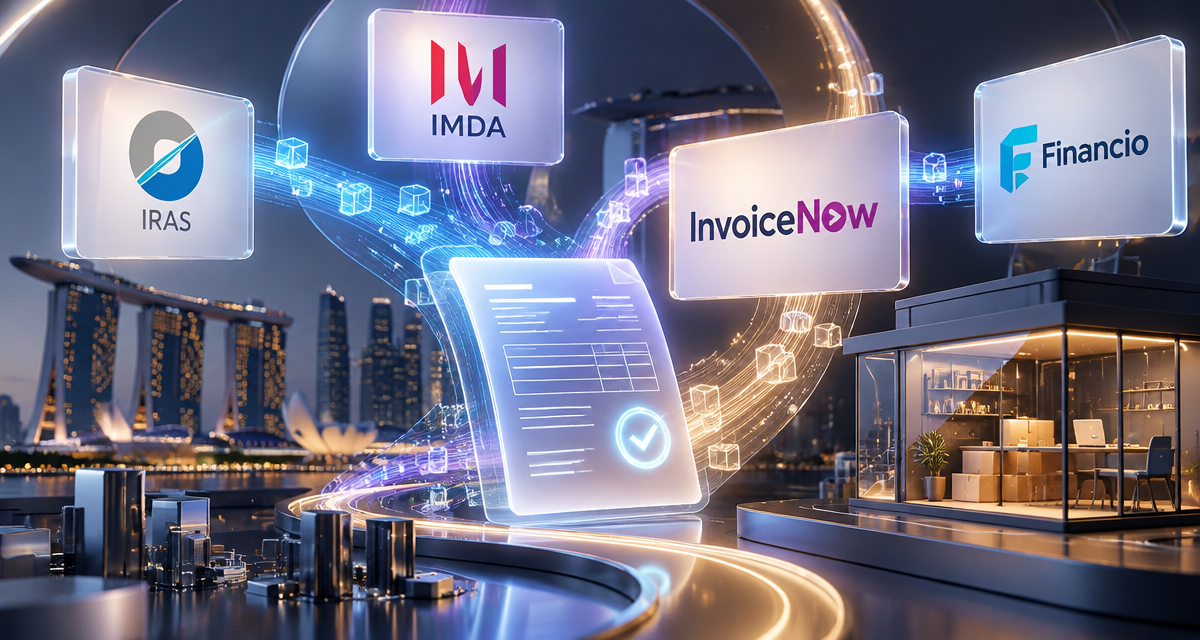
Distinguish InvoiceNow From Sending PDF Invoices
Many Singapore SMEs often conflate the act of emailing PDF invoices with true e-invoicing, but this misunderstanding exposes stark differences in workflow efficiency, compliance, data integrity, and automation. InvoiceNow—Singapore’s nationwide e-invoicing framework aligned with the Pan-European Public Procurement Online (PEPPOL) standard—represents a fundamental shift in how invoices are exchanged, recorded, and paid among businesses.
- PDF vs. Structured Data: Sending a PDF via email is a basic digital replacement for paper, but it’s fundamentally unstructured. InvoiceNow requires invoices to be generated and transmitted using machine-readable XML, enabling direct ingestion into accounting and ERP systems.
- Manual Entry vs. Automation: PDF invoices typically require manual download, verification, and data entry, which invites human error. InvoiceNow enables automated straight-through processing, minimizing touchpoints, keying mistakes, and delays.
- Audit Trail: PDFs disseminated through email are difficult to track and secure, increasing the risk of disputes, lost invoices, or payment delays. InvoiceNow provides an auditable trail, ensuring both sender and recipient have verifiable delivery and status records.
- GST Compliance: Manually handled PDF processes may fall short as compliance standards tighten. InvoiceNow incorporates fields necessary for GST reporting, and its standardization ensures the correct data is always captured for potential audits.
For SMEs evaluating options, shifting to InvoiceNow means their digital invoicing becomes part of a secure, standards-based network rather than just a digitized version of legacy paper methods. But this migration is not plug-and-play—businesses must assess technology readiness, workflow impacts, and operational training to realize InvoiceNow’s promised efficiency.
Check the GST InvoiceNow Timeline That Applies to Your Business
Adopting InvoiceNow is being strongly encouraged—and in some cases mandated—by agencies like IRAS and IMDA. The government’s staged requirements, especially surrounding GST-registered businesses, directly impact your compliance obligations, support schedules, and eligibility for incentives.
- Implementation Deadlines: For GST-registered businesses, IRAS has prescribed mandatory InvoiceNow implementation for specific segments. Non-compliance may attract penalties or forfeit of future digitalization grants.
- Support Wind-Down: Support for legacy invoice formats in government procurement, including email PDFs, will be phased out, potentially making non-PEPPOL submissions non-compliant.
- Grant Eligibility: SMEs may qualify for the LEAD Connect or Productivity Solutions Grant (PSG) only if adopting InvoiceNow within certain dates—delays can mean missing critical funding windows.
- Sector-Specific Schedules: Statutory boards, listed companies, and those with exceptional security or reporting needs (e.g., construction, import/export) may be subject to accelerated or staggered compliance dates.
| Business Type | InvoiceNow Mandate Date | Applicable Grant Window | Consequences of Delay |
|---|---|---|---|
| GST-Registered SMEs | 1 Nov 2024 (phased by turnover) | Until 31 Dec 2024 (subject to renewal announcements) |
Loss of PSG eligibility; processing delays for government contracts |
| Large Enterprises | 1 April 2024 | N/A (grants focused on SMEs) | Potential non-compliance penalties |
| Non-GST Registered Firms | Voluntary; no mandate | Conditional (if undertaking digital transformation) | Not directly penalized but at risk of supplier lockout |
Map your compliance timeline carefully. Early adopters gain not only compliance assurance but also a period of technical and financial support unavailable to slower adopters. Integrators and solution providers will prioritize businesses with hard deadlines, so resource contention is a genuine risk for SMEs waiting until the last quarter of any rollout year.
Assess Your Current Accounting Software
Successful implementation of InvoiceNow for Singapore SMEs depends heavily on your current accounting and ERP stack. Not all platforms are InvoiceNow- or PEPPOL-ready, and retrofitting can quickly incur unexpected cost, complexity, and data migration headaches.
- Native Integration: Leading platforms serving Singapore like Financio, Xero, and QuickBooks now offer built-in InvoiceNow connectivity, usually as an optional module or feature tier. Take stock of licensing: is e-invoicing part of your plan, or is an add-on or upgrade required?
- Custom/Bespoke Systems: SMEs with proprietary or heavily-customized legacy accounting will face higher friction. Retrofitting API connections, structuring XML data, and navigating PEPPOL registration may require dedicated IT involvement or a middleware provider.
- SaaS/Cloud vs. On-Premises: Cloud-first software typically offers faster rollout, centralized updates, and easier access to InvoiceNow features. On-premises platforms may need manual updates, impact testing, and extended support contracts—factor this into cost-benefit analysis.
- Data Compatibility: Does your system capture the data points InvoiceNow mandates (e.g., UEN, GST details, customer codes)? Incomplete master data causes validation failures and process breakdowns. Inventory, project-based, and multi-entity SMEs often have fragmented or incomplete records.
- Reporting and Exports: The ability to produce compliant audit reports and extract InvoiceNow transaction data is essential for ongoing IRAS reporting and dispute resolution.
Start by compiling a simple readiness checklist: InvoiceNow module availability, supported version numbers, UAT/test environment support, and historical data mapping capacity. If gaps exist, investigate whether a software upgrade, migration, or third-party invoice intermediary is most cost-effective. For SMEs running multiple back-office tools (payroll, inventory, CRM), integration touchpoints should also be mapped: misalignments here will ripple downstream as reconciliation issues and potential compliance risks.
Verify Solution Readiness and Provider Scope
Many SMEs mistakenly assume their accounting vendor is fully responsible for InvoiceNow enablement. In reality, both the software’s technical capabilities and the provider’s operational role must be clarified early in the deployment process.
- PEPPOL Service Provider Status: Ensure your vendor is a certified PEPPOL Access Point provider or is partnered with one. Without this, InvoiceNow connectivity is impossible regardless of feature claims.
- Scope of Support: Ask specifically what’s covered: initial configuration only, or ongoing troubleshooting, escalation, exception handling, and upgrades as InvoiceNow evolves. Service contracts often stop short at integration and do not include future compliance consultation.
- API and Middleware Options: For SMEs with complex, hybrid, or multi-entity accounting requirements, check for API access, middleware compatibility (such as InvoiceNow Connectors or RPA platforms), and ability to scale volume as the business grows.
- Testing Environment: Serious providers supply a UAT/sandbox environment mimicking the production InvoiceNow exchange. If unavailable, the risk of production-era failures and integration bugs rises sharply.
- Training and Documentation: Verify whether adequate documentation and structured user onboarding is included; SMEs seeking the cheapest vendor or “free” InvoiceNow connectors often discover support and documentation gaps too late.
Hidden trade-offs to consider include vendor lock-in (some cloud providers restrict future migration options or charge punitive exit fees) and update cadence (InvoiceNow compliance evolves, so providers slow to push updates may leave SMEs exposed). For businesses with sensitive data or security mandates, scrutinize where data is processed and stored—in some cases, GDPR or cross-border considerations may apply.
Prepare Business Identifiers and Customer Records
Successful InvoiceNow deployment hinges on clean, complete data. Each invoice and counterparty must be matched to standardized, universally recognized identifiers—spray-and-pray with email addresses or local nicknames will lead to failed deliveries and disputes.
- UEN (Unique Entity Number): Every business in Singapore must use its registered UEN as the primary identifier, both as invoice sender and recipient. Confirm your customer/vendor master lists include up-to-date UENs and that short codes, legacy IDs, or locally meaningful nicknames are not the default.
- GST Registration Check: Ensure all counterparties’ GST status is correctly recorded. Sending a GST invoice to a non-GST recipient (or vice versa) can trigger compliance flags and complicate audit trails.
- Email and Contact Details: While InvoiceNow doesn’t rely on email addresses for transmission, they are still vital for dispute/exception correspondence—keep these current and centralized.
- International Counterparties: InvoiceNow is PEPPOL-based and supports cross-border invoicing, but not every overseas counterparty may be registered or compliant. SMEs frequently servicing regional customers/suppliers should clarify PEPPOL participation upfront.
- Legacy Data Migration: Migrating from older platforms? Plan a systematic process for cleansing, deduping, and regularizing identifiers—importing bad data into InvoiceNow will cause persistent errors and loss of confidence in the new system.
Many SMEs underestimate this step, assuming their customer records are “good enough,” only to discover during go-live dozens of failed invoices or payment holds due to identifier mismatches. For larger, data-heavy SMEs, consider running a one-off data audit or using a data cleansing service before the formal InvoiceNow onboarding process begins.
Configure Invoice Exchange and Relevant Data Submission
Configuring InvoiceNow is not a matter of simply ‘ticking a box’ in your accounting software. Proper configuration requires mapping your invoicing process to the PEPPOL BIS Billing format, aligning master data, and making informed decisions about what invoice data to transmit, retain, or shield for regulatory privacy.
- Data Field Mapping: Verify every required field—UEN, GST details, item codes, payment terms, buyer/supplier references—is mapped correctly and populates from validated master records.
- Privacy and Data Minimization: InvoiceNow messages must not carry unnecessary personal or commercially sensitive data. Ensure only relevant, compliant fields are transmitted; over-sharing can violate PDPA and industry-specific security requirements.
- Attachment Management: Supporting documents (like signed POs or delivery notes) may be transmitted as attachments, but these can slow exchange processing and introduce file type incompatibility issues. Confirm that your platform only attaches files when required and handles allowable formats (usually PDF, XML, JPG).
- Multi-Entity and Project Billing: For SMEs operating under multiple UENs or delivering project-based services, make sure invoice configuration allows for differentiated header details and recipient mapping—mix-ups here trigger payment delays or reputational damage.
- Invoice Number Sequencing: Some legacy systems recycle or allow duplicate invoice numbers; InvoiceNow enforces unique, sequential numbering. Identify and resolve any internal conflicts to avoid cross-filing loopholes.
Hidden configuration snags often emerge only after go-live: transmission errors caused by misconfigured tax codes, unexpected null fields due to incomplete master data, and failures arising from inconsistent date/number formats. Proper UAT testing (sandbox-to-sandbox and sandbox-to-live) is crucial to sniff out and resolve these edge cases before real invoices are at stake.
Test Exceptions and Reconcile Transactions
No e-invoicing migration is complete without robust real-world testing—InvoiceNow is particularly unforgiving due to its real-time exchange, strict schema validation, and cross-party dependencies. SMEs must plan both functional and operational exceptions, not simply “happy-path” invoice exchanges.
- Common Exception Scenarios:
- Rejection due to invalid or missing UEN
- Non-delivery when customer is not on InvoiceNow/PEPPOL
- Mismatched tax codes or calculation errors
- Duplicate invoice submission
- Partial invoice (credit note / debit note) handling
- Reconciliation: Verify that every InvoiceNow-transmitted invoice is automatically reconciled against internal accounts receivable/payable ledgers. Mismatches must be logged and flagged for rapid investigation, not uncovered only at month-end closes.
- Manual Override Protocols: Define a clear workflow for handling exceptions outside the automated flow: who investigates, how are corrections made, and how are they tracked for audit purposes? SMEs relying on a single staffer or who lack written SOPs risk severe operational delays during error spikes.
- Notification and Escalation: Ensure that system-generated alerts are set up for all major failure modes—relying on manual checks drastically increases the risk of missed or delayed invoices and lost cashflow.
For SMEs with limited finance headcount, testing must not be superficial—run scenario-based UATs that simulate both typical transactions and edge cases, with active input from both finance and IT. Document all lessons learned, and keep logs for compliance auditability. SMEs neglecting serious transaction testing often discover cashflow gaps, compliance lapses, or audit flags after the regulator (or a major customer) initiates a compliance sweep.
Train Finance Staff and Assign Support Ownership
Training is often the Achilles heel in digital transformation for SMEs. Even the best automated workflow will fail if key staff aren’t bought in, or if support responsibilities are fragmented or unclear. InvoiceNow deployments require both frontline finance training and clear designation of technical and operational support champions.
- Staff Onboarding: Don’t rely on an “on the job” approach. Provide formal, role-specific training for AP, AR, and finance leads, covering invoice creation, exception handling, audit reporting, and compliance obligations under PEPPOL/ IRAS requirements.
- Change Management: Emphasize the business case for InvoiceNow: reduced errors, faster payment, compliance benefits, and lower fraud risk. Engage staff in process design to secure buy-in and identify process bottlenecks before go-live.
- Support Assignment: Assign a named owner for InvoiceNow technical issues (usually finance IT analyst or an external consultant) as well as an operational supervisor to handle day-to-day flow and exception management. Avoid blended roles that risk responsibility dilution.
- Knowledge Continuity: Document every process, configuration, and change log. SMEs particularly vulnerable to staff turnover should keep up-to-date SOPs and train secondary staff to mitigate key-person risk.
- Escalation Matrix: Define how and when problems are escalated to vendors, IRAS/IMDA, or internal executives—lost invoices or persistent failures must not cause finger-pointing or “email tennis”.
The ultimate difference-maker is focus: SMEs prepared to invest in ongoing staff enablement and process clarity achieve smoother transitions, maximize InvoiceNow’s value, and de-risk compliance—while under-prioritized training often leads to botched go-lives, operational fire-fighting, and avoidable cashflow hits.
Comparative Breakdown: InvoiceNow Adoption for Singapore SMEs
| Solution Provider | Integration Approach | Best SME Fit | Upfront Cost | Support Scope | PEPPOL Compliance | Notable Frictions |
|---|---|---|---|---|---|---|
| Financio | Native InvoiceNow module (add-on) | Small/Medium, cloud-first new adopters | ~$0–$200 per year (often grant-subsidised) | All-inclusive; training, UAT support | Certified Access Point | Limited for complex, multi-entity needs; some change management required |
| Xero | Cloud integration; InvoiceNow plugin required | Medium, multi-entity, regional exposure | $100–$400 per year | Limited to plugin/runtime issues | Via PEPPOL partners | Data migration for legacy users may be challenging |
| Custom ERP | API/middleware build-out | Larger SMEs, high-volume, custom needs | $1,000–$10,000+ one-time | Project-based; third-party dependency | Depends on chosen AP provider | Significant integration/testing overhead, high support costs |
| Manual Middleware (PDF Generator) | Manual PDF→XML conversion | Very small, cost-minimizing firms | Low (<$100, mostly labour-driven) | No formal ongoing support | Not PEPPOL/InvoiceNow compliant | Labour intensive, prone to compliance failure |
Conclusion
Implementing InvoiceNow for Singapore SMEs is a multidimensional project involving far more than software updates: it requires a holistic reworking of invoice flows, rigorous data preparation, realistic exception management, and proper staff training. The most successful transitions are led by SMEs who are proactive—scrutinizing both technical and operational readiness, clarifying provider responsibilities, and testing workflows under real-world stress conditions. With the regulatory landscape rapidly evolving, the cost of inertia is rising: operational delays, lost grants, and outright compliance penalties will increasingly afflict laggards. SMEs that treat InvoiceNow not as a mere compliance checkbox but as a genuine operational upgrade will be best-positioned for both present efficiency and future regulatory change.