What Google Announced on 13 October 2026
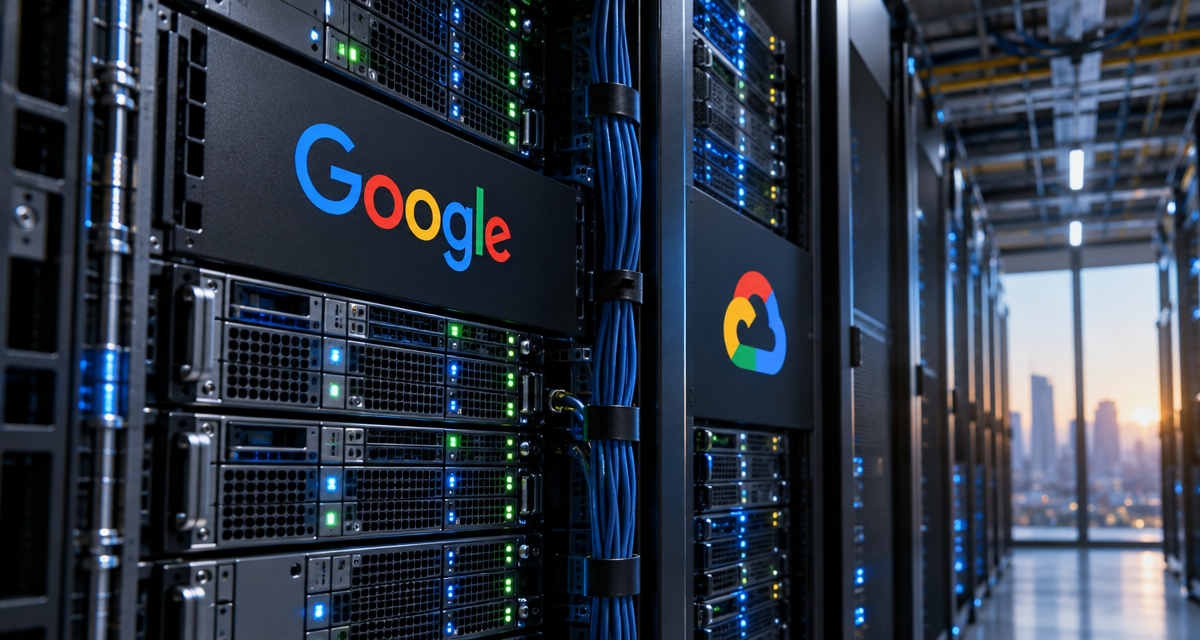
On October 13, 2026, Google made waves in enterprise AI by unveiling Gemini 4 Argon—a significant expansion of the Gemini model family aimed squarely at business workloads. Unlike previous iterations, Gemini 4 Argon targets deep business integration, compliance, and operational reliability for large-scale organizational use cases. The announcement outlined Argon’s position as the flagship enterprise-grade language model, offering advanced reasoning capabilities, extended multi-turn context, and granular control mechanisms designed for critical business processes.
Key differentiators highlighted at launch included native support for secure integration via Google Cloud APIs, custom data connectors, and a permissioned framework suitable for internal business tools, rather than just generic chatbot or creative applications. Google emphasized improvements in determinism, task completion accuracy, and latency guarantees—addressing frequent enterprise objections around reliability and auditability seen in prior models.
What set this launch apart was Google’s focus on business deployment choices: Gemini 4 Argon would be accessible via multiple channels—Google AI Studio, Cloud APIs, and tailored agent orchestration platforms—but with explicit pricing and operational tier options targeting mid-market and enterprise teams. Google also stressed its compliance with regional data residency and security mandates, promising distinct Singapore data processing locations as part of Argon’s regional expansion.
The announcement was not merely a model upgrade; it was a strategic signal of Google’s intent to move from consumer-facing generative AI to mission-critical business platforms tailored for regulated markets, workflow automation, and data-sensitive environments.
Distinguish the Model From Gemini Apps and Agents
Understanding how Gemini 4 Argon fits into Google’s Gemini ecosystem is critical for deployment planning. While the Gemini “apps” (like the Gemini web interface and mobile apps) provide user-facing, consumer-grade experiences running atop various Gemini models, Gemini 4 Argon is strictly a business model—licensed and deployed for organizational use cases via API or managed orchestration.
Similarly, Gemini “agents” refer to a suite of workflow automators, typically prebuilt for end-users and reliant on generic AI capabilities. In contrast, Gemini 4 Argon is an underlying model offered via Google Cloud endpoints or development frameworks. This distinction matters for developers and IT teams evaluating where business logic and security boundaries reside:
- Gemini Apps: Consumer or “pro” productivity tools. Minimal control over infra, limited enterprise governance, no custom data integration.
- Gemini Agents: Preconfigured flows, typically not suitable for regulated business processes, little room for advanced customization.
- Gemini 4 Argon: Direct model/API, designed for embedding in custom business applications, internal portals, workflow engines, or logic-heavy backend systems. Brings enterprise governance, service-level controls, and observability.
Choosing between these options is non-trivial: implementing Gemini 4 Argon via API enables audit trails, escalation paths for failed tasks, and tighter access control. However, this extra flexibility comes with more complex integration requirements and increased DevOps overhead compared to simply using Gemini consumer apps or lightweight agents.
Assess Multi-Step Business Tasks and Model Limitations
The promise of Gemini 4 Argon is advanced multi-step reasoning and reduced hallucination on business-centric workflows—expense report processing, multi-policy contract review, compliance flagging, or tiered customer support escalation. The model supports extended context windows (up to 128K tokens) and improved tool-calling reliability, enabling more sophisticated chains of reasoning.
However, there are inherent limitations:
- Reasoning Boundaries: While much better at following hierarchical instructions than commodity LLMs, Argon cannot perform logic it hasn’t explicitly seen in training or that conflicts with hard-coded business rules; edge-case tasks will fail unpredictably without human-carved workflows.
- External System Integration: Argon can call tools and ingest business data via API, but orchestrating robust multi-step processes (e.g., fetching data, writing to a database, then escalating via email) still requires strong backend logic—Argon is not an RPA (Robotic Process Automation) suite.
- Latency Accumulation: Complex multi-step workflows may result in non-deterministic delays, especially if chained tool calls or cross-regional data movement is involved.
- Control: While improved over previous generations, prompt engineering for strict compliance or deterministic output remains tricky; Argon will still occasionally interpret vague instructions incorrectly.
Use cases best fit for Argon today are those where AI augments—rather than replaces—well-defined business logic. For example, using Argon to summarize long legal documents, extract structured insights from sales calls, or draft compliance emails that are then routed to human reviewers.
Evaluate Access Options for Singapore Businesses
Google has prioritized offering Gemini 4 Argon in high-growth APAC markets from launch, but there are practical considerations for Singapore-based firms regarding service models, provisioning, and compliance. As of Q4 2026, there are three access options:
- Google AI Studio: Immediate access through a web-based development environment, ideal for prototyping or technical evaluation. Designed for individual developers and pilot teams—API keys provisioned on per-project basis.
- Cloud Vertex AI API: Scalable, production-ready endpoint via Google Cloud. Supports IAM roles, auditing, and billing integration—intended for embedded enterprise workflow automation.
- Managed Instance Hosting: Early access for regulated industries (finance, health) enables deployment in physically isolated environments, with controls over data ingress/egress and network-level segmentation.
For Singapore businesses, Vertex AI access offers the broadest compatibility with existing Google Cloud architectures, including integration with common security policies, VPC-SC (Virtual Private Cloud Service Controls), and rapid scaling. However, AI Studio might remain the fastest route to internal pilots or developer evaluation sprints, with the drawback of limited governance and more restrictive throughput caps.
Notably, some legacy Google business contracts (especially education or government verticals) may require additional approval steps to unlock Argon due to regional export controls or compliance reviews—Singapore-specific vetting processes add wait time here.
Verify Regional Availability and Data Processing Locations
For heavily regulated industries or global companies with strict data residency mandates, location of data processing is non-negotiable. Google has explicitly certified Gemini 4 Argon for deployment within Southeast Asian data centers, including physical zones in Singapore.
| Deployment Mode | Available in Singapore | Default Data Processing Region | Cross-Region Data Egress Controls | Compliance Certifications |
|---|---|---|---|---|
| Google AI Studio | Yes, as of Q4 2026 | Singapore/SEA with overflow to APAC by policy | Opt-in restrictions; limited by UI configuration | SOC 2, ISO 27001 for dev/test workloads |
| Vertex AI (Cloud API) | Yes | Singapore, controlled by GCP region selection | Strict; configurable in org policy / VPC-SC | PIPA SG, MAS TRM, ISO/IEC 27017/27018 |
| Managed Hosting (Private Build) | Limited Early Access | Dedicated Singapore on-prem or hosted zone | Enterprise network isolation, explicit approval | Custom industry audit; legal review required |
For banks, insurance, or government projects, only Vertex AI and private-hosted Argon instances currently guarantee local data processing and allow technical DPA (Data Protection Agreement) verification. AI Studio is suitable for pilot projects, but actual deployment at scale should be confirmed against compliance checklists unique to Singapore’s Personal Data Protection Act (PDPA) and Monetary Authority of Singapore (MAS) standards.
Understand Pricing and Model Usage Costs
Unlike consumer-facing models, Gemini 4 Argon introduces granular pricing tiers designed to map onto distinct business use cases and operational risk profiles. Costs are generally metered in $USD per 1,000 input/output tokens, with additional fees for advanced features (e.g., file uploads, parallel tool calls, or high availability SLA guarantees).
| Tier | Intended User Scale | Context Window | Base Pricing per 1K Tokens (USD) | Included Features | Potential Additional Costs |
|---|---|---|---|---|---|
| Developer | Single user, small team pilots | 32K tokens | $0.03 | API access, prompt/file upload (size limit) | Throughput throttle above 50K tokens/month |
| Business | Org-wide workflows, medium teams | 64K tokens | $0.027 | IAM integration, audit logging, tool calls | Premium for custom tool plugins, SLAs |
| Enterprise | Uncapped, global operations | 128K tokens | $0.025 | Dedicated region, HA, priority queueing | Custom contract; DLP/in-region processing, extra |
Pricing in Singapore is pegged to global USD rates, although local taxes and Google Cloud platform discounts may apply for existing enterprise agreements. For high-volume workloads, dedicated enterprise contracts can negotiate bulk token pricing and tune regions for cost efficiency.
One potentially hidden cost is egress or model execution in multi-region flows: if workflows span Singapore and non-local Google Cloud regions, cross-border data charges may apply and can be substantial for batch or bulk processing use cases.
Connect Business Data and Define Tool Permissions
The full value of Gemini 4 Argon for business is unlocked via API-based integration with internal systems. Google enables several mechanisms for secure data exchange and controlled tool invocation:
- Vertex AI Connectors: Prebuilt integrations for Google Workspace, BigQuery, Dataplex, SAP, Salesforce, and major cloud storage providers. Can be permission-scoped, with runtime credential isolation.
- Custom APIs and Webhooks: Businesses can expose internal APIs or event listeners—for example, to allow Argon to query procurement histories, trigger HR provisioning tasks, or ingest anonymized audit logs.
- Per-Tool Permissioning: IAM-based policies (at the Google Cloud level) support role-restricted tool calls: e.g., only certain users’ jobs can initiate payment requests or access sensitive files. Configurable via standard admin console.
In practice, configuring robust permissions is non-trivial:
- Deploying fine-grained access controls at the API and data layer is critical to prevent over-permissioned workflows (e.g., an AI invocation unintentionally accessing PII or critical financial systems).
- For audit-heavy industries, integrating audit log exports with SIEM (Security Information and Event Management) tools is recommended for compliance reporting.
- Internal business policies (e.g., allowance for temporary data retention for inference) must be mapped to Argon’s retention and data access defaults through explicit contract settings or technical enforcement.
Correctly defining tool permission boundaries and ensuring principle of least privilege will directly determine whether an Argon-powered system is audit- and regulator-friendly—or introduces unmanaged risk.
Test Accuracy With Representative Business Workloads
Before embracing Gemini 4 Argon for production, most businesses must rigorously test its real-world accuracy across representative tasks. Unlike small-scale consumer evaluations, enterprise testing is characterized by repeatability, edge-case coverage, and explicit SLAs (Service Level Agreements).
Recommended steps for business validation:
- Dataset Preparation: Gather a corpus of actual business documents, task specifications, and unstructured data typical for intended workflows. Sanitise for proprietary/PII before use in public environments (e.g., AI Studio).
- Benchmark Baseline: Test head-to-head against existing in-house, human, or vendor solutions using precise metrics (e.g., extraction F1, error rate, compliance recall).
- Evaluate Failure Modes: Focus on rare but critical error types: missed compliance flags, out-of-policy recommendations, or system breakdowns under ambiguous prompts.
- Simulate Real-World Variance: Test with intentionally imperfect data—typos, non-standard formats, document scans, and edge cases—to measure robustness.
- Conduct Human Review: Business stakeholders should manually assess high-impact or borderline outputs to measure practical trustworthiness, not just statistical accuracy.
It’s not uncommon for initial accuracy to lag vendor benchmarks by 5–15% when exposed to organization-specific legacy systems, file formats, or policy logic. Iterative tuning, prompt engineering, and tool plugin refinement are almost always necessary before scaling out deployment.
Evaluate Latency and Failure Handling
Business applications demand predictable latency and resilient failure handling—unlike consumer chat apps, enterprises cannot tolerate unpredictable delays or silent errors across critical workflows. Gemini 4 Argon has made strides in minimizing p99 (99th percentile) latency, but users should be prepared for variability depending on access mode and complexity of multi-step tasks.
| Access Method | Average Latency (Complex Prompt, 128K tokens) | p99 Latency Spike Scenarios | Failure Handling Features |
|---|---|---|---|
| AI Studio | 2–8 seconds | Prompt chaining, file uploads, concurrent load | Graceful API retries, basic error trace export |
| Vertex AI API | 1–3 seconds | Peak regional usage, custom tool call delays | Retry logic, queue depth monitoring, custom callback |
| Managed/On-Prem | Sub-1 second (dedicated hardware) | Network partition, local failover event | Full circuit breaker, auto-failover, SLA trigger |
Special considerations:
- Model timeout errors may return incomplete or partial results if not caught and retried—test all critical paths with realistic production load.
- For transactional business flows (e.g., payments, compliance), fallback paths to human escalation must be explicitly engineered, as Argon will not “self-correct” failed tool chains.
- Observability: Vertex AI integration supports built-in telemetry, but deep-dive error analytics typically require coupling with Google Operations Suite or a third-party monitoring provider.
Tuning for low-latency and robust error recovery often requires additional orchestration logic and may push teams toward direct API integration over UI-driven access, particularly for regulated or high-availability environments.
Compare Deployment Effort With Existing AI Tools
Transitioning from legacy AI, RPA, or workflow automation suites to Gemini 4 Argon is not purely a technical upgrade—it involves a substantive shift in operational thinking, vendor management, and day-to-day business process engineering.
- Integration Overhead: While Gemini 4 Argon boasts more prebuilt connectors than prior Google LLMs, migrating business logic or complex tool flows typically requires reauthoring prompt patterns, adapting IAM policies, and performing custom workflow mapping.
- Skillset Gap: Success depends on hybrid teams—prompt engineers, data pipeline specialists, and DevOps, rather than traditional workflow owners. This may necessitate workforce upskilling or new vendor relationships.
- Change Management: AI-driven outputs must be embedded into existing business processes, which often involves revising standard operating procedures, training end users, and securing executive buy-in for revised escalation or audit practices.
- Comparative Complexity: Legacy RPA suites or static NLU bots often allow “drag and drop” configuration by business users. In contrast, Argon deployments demand close developer involvement and technical oversight, at least for multi-tool, high-stakes workflows.
For businesses already committed to Google Cloud, the infrastructure lift is lower, as Argon slots into existing IAM, billing, and monitoring frameworks. For others, migration requires a deliberate architectural evaluation to ensure compatibility with security, networking, and compliance regimes.
Build a Controlled Pilot and Adoption Decision
For most Singapore businesses, the recommended route to Gemini 4 Argon adoption is a time-boxed, tightly scoped pilot—ideally anchored around a high-impact business process where measurable ROI can be quickly demonstrated and integration complexity revealed early.
- Scoping: Select a business workflow with clear KPIs: turnaround time (TAT), manual intervention reduction, or error rate improvement. Secure sponsorship from both IT and business process owners.
- Controlled Access: Use Google AI Studio for the initial technical spike, then escalate to Vertex AI API for full system integration once requirements stabilize.
- Measurement: Set explicit success/fail criteria—target output accuracy, SLAs, and user acceptance thresholds.
- Security & Compliance: Implement minimum viable permissioning and audit logging from the outset, even during pilot.
- Plan for Expansion: Document integration gaps, required team skillups, and boundary conditions surfaced during the pilot to inform full-scale rollout planning.
Be aware that business adoption is rarely linear: feedback loops from users, security teams, and compliance auditors often trigger refinement or rollback of proposed workflows. Pilots should be structured for agility—fast testing, rollback safety, and minimum risk exposure—while laying the groundwork for rapid expansion if the solution meets business and technical thresholds.
Net result: Gemini 4 Argon delivers enterprise-grade AI for business, but organizations must be prepared for a new level of integration complexity, operational tuning, and regulatory alignment before realizing transformative returns.