Buying Managed Cloud Security in Singapore: A Practical RFP Guide
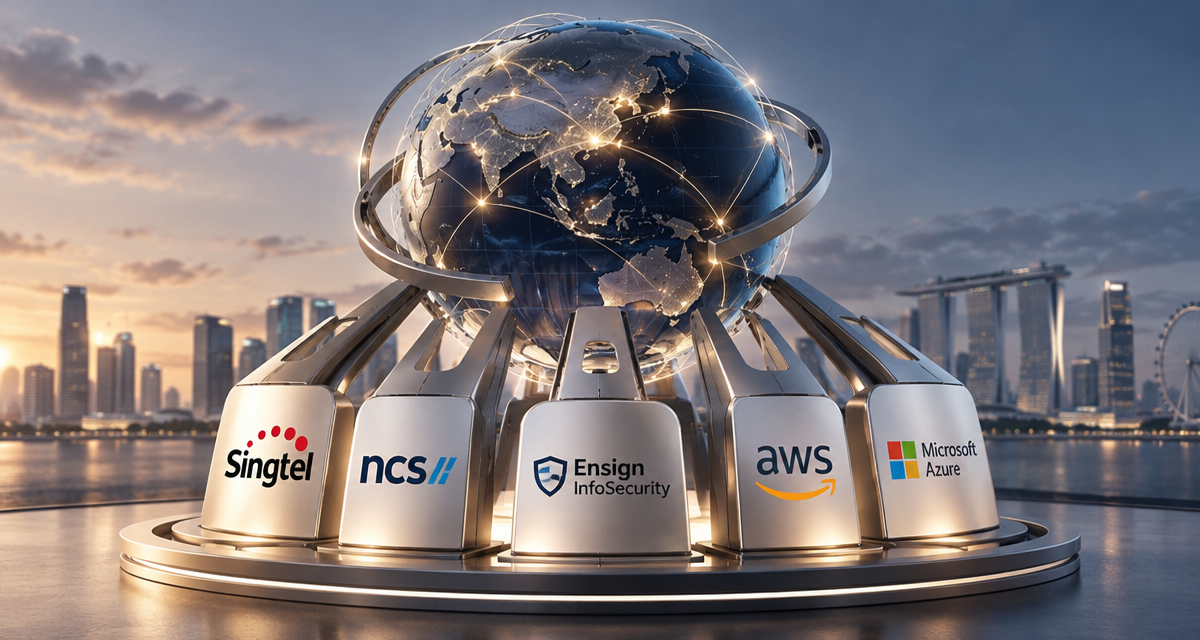
When evaluating managed cloud security Singapore providers through a comprehensive RFP, enterprises and SMEs face a multi-layered operational and compliance landscape. This guide breaks down technical requirements, scrutinizes feature sets, and reveals the crucial trade-offs in selecting between Singtel, NCS, Ensign InfoSecurity, and direct hyperscaler platforms such as AWS and Microsoft Azure. Each section below anchors SME procurement teams to real operational needs, regulatory realities, and future-proof selection criteria for managed cloud security Singapore solutions.
Map Cloud Assets and Existing Security Controls
Launching a managed cloud security Singapore RFP begins by exhaustively mapping all cloud assets (IaaS, PaaS, SaaS) and understanding existing security controls and coverage gaps. For many Singaporean SMEs, this process is complicated by fragmented multi-cloud environments and scattered SaaS tools. Integration with legacy systems (on-prem AD forests, file servers, and custom applications) can introduce significant technical friction—especially when legacy APIs or proprietary protocols block real-time inventory sync.
- Real-World Integration Challenges: Even leading MDR/BaaS providers like Ensign InfoSecurity may require complex agent deployments or custom connectors to achieve full asset visibility across AWS, Azure, and edge IoT assets. Asset discovery tools embedded in Singtel’s managed offerings often struggle to normalize metadata from divergent cloud sources, requiring manual reconciliation via their dashboards.
- Feature Teardown: Most platforms will auto-discover workloads via CSP-native APIs, but often these integrations are limited to the public endpoints or high-trust identities already present in their inventory. Gaps appear when workloads are spun up with ephemeral or misconfigured identity permissions, leaving assets invisible to SOC teams until aggregated in a third-party SIEM.
- Hidden Trade-Offs: Relying on vendor asset management means ceding some direct control and speed. In exchange for vendor visibility dashboards, SMEs may sacrifice instant-on demand for custom tagging, granular business context, or real-time anomaly detection—capabilities required for nuanced governance.
- Future-Proofing: We’ll see AI-driven asset discovery mature, with platforms contextually mapping assets not just by static inventory but using behavioral analysis (tracking process communications, cloud API call patterns) within 12–24 months. This will reduce shadow IT but also introduce new privacy, explainability, and regulatory review needs.
Set Procurement Requirements for SMEs
SMEs in Singapore must tailor RFP criteria to practical managed cloud security Singapore needs, balancing budget, regulatory baseline (MAS-TRM, PDPA), and operational simplicity. Procurement often stumbles where service catalogs are “one-size-fits-all”—especially from large telcos or global hyperscalers that anchor pricing to enterprise-scale volumes.
- Technical Friction: SME-focused procurement is slowed by mandatory minimums (e.g., NCS and Singtel may require 12-month commitments and onboarding fees, regardless of the customer’s actual usage or headcount). Billing models across AWS and Azure default to pay-as-you-go, but SMB accounts lack the custom SOC integration and granular reporting of local MSP packages.
- Feature Teardown: Many managed suites offer predefined security bundles (SOC monitoring, DDoS WAF, incident response), but activating these requires clear delegation agreements—especially in hybrid architectures. For example, Ensign’s onboarding portal asks SMEs to register all VPCs, cloud-native firewalls, and endpoint telemetry sources, but customization beyond their standard templates incurs professional services costs.
- Hidden Trade-Offs: Local MSPs promise “white glove” support but at much higher TCO for short-term contracts versus hyperscaler add-ons. Direct CSP options (AWS GuardDuty, Azure Sentinel) lower costs but require SMEs to maintain operational security roles and scripting capability—a poor fit for non-technical teams.
- Future-Proofing: Expect Singaporean government and MAS frameworks to push for standardized procurement benchmarks—potentially favoring managed providers who can pre-certify compliance dashboards and automation for SME onboarding.
Define Monitoring and Remediation Responsibilities
The most costly SOW disputes in managed cloud security Singapore contracts occur at the junction of monitoring and response: who is on the hook for real-time threat detection, what thresholds trigger vendor involvement, and how deep will partners go into incident remediation?
- Technical Friction: Integration with the provider’s SOC/SIEM is rarely out-of-the-box. SMEs face onboarding bottlenecks such as missing log sources (especially from third-party SaaS clouds like Salesforce or O365), inconsistent event forwarding, or latency in cross-cloud event correlation. Direct CSP SIEM solutions integrate natively but default rulesets can miss nuanced attack vectors unique to Singapore’s regulatory context.
- Feature Teardown: Singtel and NCS jointly offer 24/7 monitoring, but their dashboards often silo cloud events from on-prem incidents. Automated workflow triggers (e.g., terminating a suspicious EC2, forcing Azure password resets) only cover actions within the vendor’s direct management boundary—requiring clear up-front playbooks for hybrid cases.
- Hidden Trade-Offs: “Full managed response” is a spectrum. Deep remediation (e.g., account lockout, data restore, legal notification) is usually project-based and not included in base pricing. Choosing a lean package saves cost but offloads forensics, threat hunting, or legal notification to the SME’s in-house teams.
- Future-Proofing: Autonomous remediation via cloud-native SOAR (Security Orchestration Automated Response) will increase. Expect more providers to offer per-incident “human-in-the-loop” escalations to balance speed with the risk of automated disruption in critical Singapore-based workloads.
Specify Identity and Configuration Checks
Identity governance and secure-by-default cloud configuration are the primary sources of breach in Singaporean SMEs. Managed cloud security Singapore providers take vastly different approaches to identity posture checks, from basic role audits to longitudinal behavioral baselining.
- Technical Friction: Integration with IdPs (Azure AD, Okta, on-prem LDAP) often requires manual mapping and periodic token refreshes—creating friction and, occasionally, lapses in real-time posture reporting. Misalignment between cloud IAM policies and legacy AD groupings frequently results in missed privilege escalation risk alerts.
- Feature Teardown: The leading providers offer continuous configuration drift detection, feeding flagged misconfigurations into user-accessible portals. Portals typically list flagged S3 buckets, public VMs, or overprivileged accounts, allowing SMEs to approve or remediate per-issue. Sophisticated providers (e.g., Ensign) overlay these checks with real user behavior analytics—spotting “impossible travel” logins or credential stuffing signatures native to Singapore’s regional threat landscape.
- Hidden Trade-Offs: Easy dashboards mean sacrificing the depth of rule customization. MSP quickstart templates (e.g., blocking non-Singapore logins, alerting on unsecured cloud storage) may miss niche workflow exceptions. Running one’s own monitoring stack delivers deeper granularity but requires both technical capability and continuous tuning effort.
- Future-Proofing: Zero trust and identity-based microsegmentation will become table stakes, with vendors embedding AI-based anomaly detection into cloud access and configuration drift reporting for real-time, context-aware alerts across Singaporean tenant profiles.
Request Evidence of Cloud Platform Expertise
Assessing a managed cloud security Singapore partner’s operational readiness hinges on credible proof of cloud-native expertise. The reality is not all providers can demonstrate hands-on experience with the complex multi-cloud environments typical in local regulated sectors (finance, healthcare).
- Technical Friction: Many MSPs tout vendor badges, but only a subset have architects who’ve directly provisioned, managed, and defended workloads on AWS/Azure at production scale. RFPs should demand anonymized case studies and “tabletop” incident runbooks—otherwise, SMEs risk being assigned generic project managers unfamiliar with Singapore’s MAS/OIC requirements.
- Feature Teardown: Direct CSPs (AWS, Azure) showcase expertise via transparency into their own compliance reports, but struggle to tailor security playbooks to local SME context. Singtel and NCS’s service catalogs list cloud platform certifications alongside technical staff bios—yet seldom give line-of-sight into the team handling your SLA. RFPs should request demo access and live Q&A for platform deep-dives.
- Hidden Trade-Offs: Established providers with all the major certifications may offer slower, less personalized service. Newer boutique SOC teams bring agility and modern practices but sometimes lack the ability to escalate or escalate across complex partner dependencies.
- Future-Proofing: Automated skills validation—like digital runbooks, real-time skills benchmarks, and role-based learning dashboards—will surface in service catalogs soon, allowing vendors to prove retained expertise even as cloud platforms evolve.
Verify Certification Scope and Validity
Certification mismatch and expired credentials frequently derail managed cloud security Singapore projects, especially during audits and regulator reviews. RFPs must specify not just “possess ISO 27001/SOC 2” but also require explicit evidence of scope and currency for all cloud workloads hosted or managed.
- Technical Friction: Many managed service providers have certifications at the corporate level but not for their regional (Singapore/ASEAN) or cloud-specific data centers—meaning customers risk regulatory non-compliance even if the contract says “ISO accredited.” AWS and Azure publish region-specific compliance artifacts, but few SMEs retrieve or validate these during onboarding.
- Feature Teardown: Dashboards in commercial offerings rarely make certification scope transparent. NCS and Ensign provide customer-accessible portals showing up-to-date certifications by service region, with explicit expiry dates. Centralizing this in a dashboard accelerates due diligence but adding custom controls or compliance inheritance for hybrid stacks is rarely included without up-charge.
- Hidden Trade-Offs: Prioritizing certification for peace of mind often comes at the expense of agility in adopting new features—certified providers may restrict or delay access to preview/beta functions that aren’t yet in audited scope.
- Future-Proofing: Expect converged compliance platforms to emerge, with real-time attestation APIs (from AWS Artifact, Azure Service Trust Portal) providing on-demand, audit-grade certification status integrated into third-party MSP dashboards.
Establish Incident Escalation and Reporting Requirements
Incident escalation clarity is the make-or-break criterion in managed cloud security Singapore contracts. 90% of disputed claims with local providers stem from unclear escalation trees, delayed breach reporting, or ambiguous recovery SLAs.
- Technical Friction: Integration between the vendor’s incident response (IR) workflow and the SME’s own communications (PagerDuty, Teams, Slack, WhatsApp for Singapore context) is nearly always bespoke. Missed alerts often result from mismatched notification protocols—especially for SMEs using a mix of email and IM platforms, or when IR teams are on different time zones.
- Feature Teardown: Advanced managed providers embed customizable escalation workflows in their dashboards—allowing customers to set thresholds and on-call contacts, while linking ticketing (ServiceNow, Jira) directly to IR progress. Some even offer real-time breach impact calculators or compliance breach reporting triggers (specifically mapped to MAS and PDPA timelines). AWS/Azure default to generic dashboards unless additional paid IR packages are added.
- Hidden Trade-Offs: Over-customizing escalation can lead to delays or alert fatigue—SMEs risk missing critical incidents amid benign alerts or suffering rigid triage protocols that don’t fit their operational reality.
- Future-Proofing: AI-driven playbook automation will streamline initial IR triage, routing incidents to the right responders with contextually aware escalation based on asset criticality, business hours, or regulatory exposure.
Compare Quotes Against the Same Service Scope
Comparative pricing of managed cloud security Singapore solutions is challenging due to apples-to-oranges packaging. The true TCO includes onboarding, integration, minimum commitments, and per-incident fees—often camouflaged in tiered catalogs.
- Technical Friction: Pricing calculators from AWS and Azure are transparent but omit custom onboarding/connectivity costs SMEs face when integrating with on-prem or third-party SaaS. Local MSP quotes commonly leave out add-on fees for advanced monitoring, custom dashboards, or regulatory reporting until post-sale.
- Feature Teardown: Leading providers showcase per-user, per-workload, or per-event pricing. Singtel and NCS typically quote on an annual per-seat or per-asset basis with minimum headcount, while Ensign pushes per-incident retainers for advanced SOC. Direct CSP offerings go “pay-as-you-go” but expect customers to self-configure and self-support without added fees until premium tiers are unlocked.
- Hidden Trade-Offs: Lower monthly rates often hide the surcharge for bespoke integrations, advanced support, or regulatory documentation. Conversely, all-in managed plans can be overkill (and overpriced) for SMEs with a stable, small cloud footprint.
- Future-Proofing: Dynamic, usage-based pricing incorporating AI risk scoring and automated compliance drift detection will become the new normal, enabling SMEs to choose more cost-efficient, context-sensitive managed security as their operations scale.
| Provider | Target Business Size | Pricing Model | Bundled Features | Integration Complexity | Compliance Coverage |
|---|---|---|---|---|---|
| Singtel | Mid-large SME, Enterprise | Annual/Per Asset, setup fees | SOC, WAF, DDoS, IR | Moderate; MSP/Hybrid | ISO27001, PDPA, MAS |
| NCS | Large SME, Regulated | Annual, Min Commitment | 24/7 SOC, SIEM, Reporting | Complex (custom) | ISO, OIC, Industry-specific |
| Ensign InfoSecurity | SME, Regulated, Custom | Per-Incident, Retainer | MDR, Forensics, Compliance | High (multi-cloud, cross-platform) | ISO, MAS, Custom audits |
| AWS | Any (self-managed) | Usage-based, à la carte | Native cloud security, SIEM (add-on) | Low (AWS-native), high (hybrid) | SOC 2, ISO, regionally scoped |
| Microsoft Azure | Any (self-managed) | Usage-based, à la carte | Azure Sentinel, Defender, compliance | Low (Azure-only), high (hybrid/on-prem) | SOC 2, ISO, regionally scoped |
Plan Onboarding and Vendor Exit
Vendor lock-in and unresolved exit planning are the top hidden costs in managed cloud security Singapore contracts. SMEs routinely underestimate the complexity of migrating monitoring, incident response, and compliance documentation when switching providers or transitioning in-house.
- Technical Friction: Onboarding with a provider often triggers DNS, endpoint, VPC, and SIEM agent deployments—each carrying real-world compatibility and change control risks. Exit processes, unless specified, may delay log and report handover or carry unexpected data “unwinding” fees, especially with local majors whose cloud connectors run as proprietary black boxes.
- Feature Teardown: Mature managed providers surface onboarding and offboarding workflows inside their customer dashboards: allowing SMEs to self-initiate asset population, migration status checks, and export all compliance/audit histories. AWS and Azure let customers self-serve, but export of SIEM, incident, or user behavior logs for onward transfer isn’t guaranteed unless pre-arranged. NCS and Ensign offer “white-glove” onboarding—but these may involve weeks-long professional services projects, and rapid offboarding is rarely SLA’d.
- Hidden Trade-Offs: Easy onboarding often means tight vendor integration—leading to stickier dependencies and higher switching costs. Choosing modular, portable security tooling may cost more upfront but slashes the risk of being locked into proprietary SOC or reporting platforms when business models shift or compliance needs grow.
- Future-Proofing: Interoperability standards are on the horizon. Expect greater support for automated bulk export (and import) of all operational, security, and compliance data—reducing both onboarding time and exit friction for SMEs in multi-cloud Singapore environments.