AI Infrastructure Stocks Slide as Financing Concerns Return
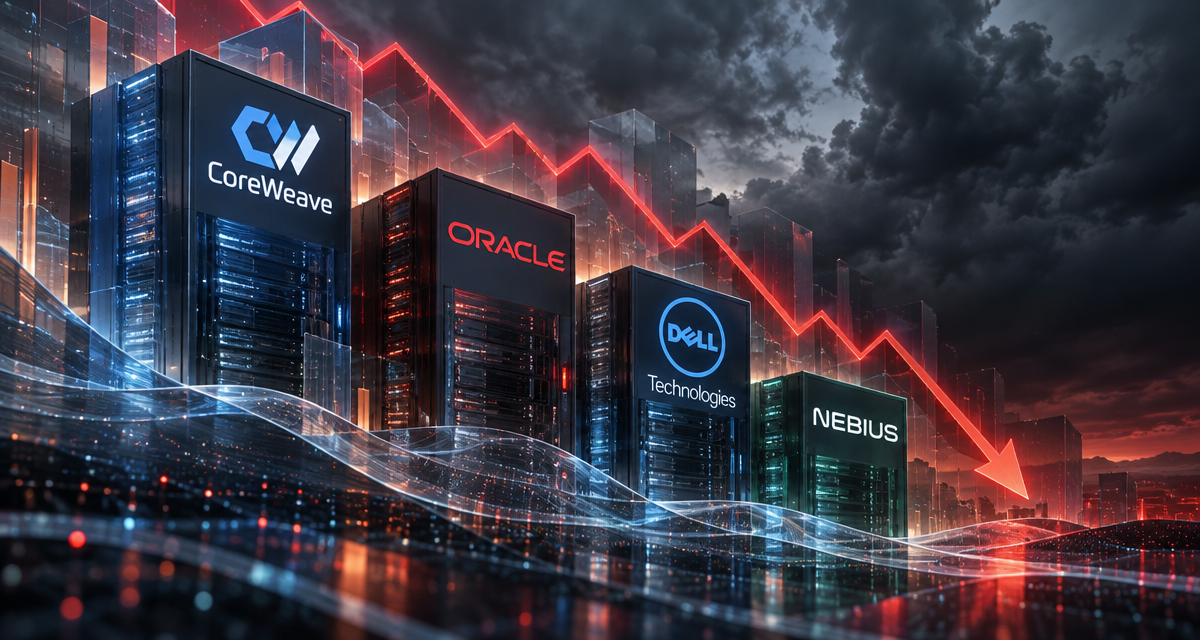
The abrupt drop in AI infrastructure stocks on 14 October caught both retail and institutional investors off guard. As capital markets recalibrated risk after strong US inflation data, businesses developing and scaling generative AI systems—specifically CoreWeave, Oracle, Dell Technologies, and Nebius—found their share prices under renewed pressure. This article provides a granular, technical breakdown of what drove the sell-off, which names took the hardest hit, and where investors and buyers of these platforms should focus in the upcoming earnings cycle.
What Happened in the 14 October Sell-Off?
The 14 October sell-off in ai infrastructure stocks was triggered primarily by an unexpected uptick in US inflation metrics. When Consumer Price Index (CPI) data beat expectations, bond yields immediately spiked, raising the implied cost of debt. For AI cloud providers and hardware companies already operating at razor-thin net margins and aggressive expansion timelines, the downstream impact was swift. Sell-side analysts cut price targets on CoreWeave and Oracle, citing both direct financing headwinds and broader risk-off sentiment in tech.
- Technical Friction: Many of the affected companies are in the midst of aggressive data centre rollouts, relying on variable-rate debt. As rates shift, budget forecasting and internal rate of return (IRR) calculations become significantly more volatile. Even mature platforms like Oracle Cloud see integration timelines stretched due to increased approval loops and slower CAPEX deployment.
- Workflow Impact: Businesses onboarding with Dell or Nebius often depend on rapid access to new AI superclusters. With uncertainty in infrastructure expansion, provisioning backlogs can become daily issues. Internal tickets escalate as compute project managers face delays in bringing clusters online to support ML model training.
- Hidden Trade-Offs: Prioritizing rapid AI infrastructure rollout and scale brings cost risk; slowing deployments makes platforms less competitive for research teams demanding near real-time scaling.
- Future-Proofing Analysis: As cloud-native AI platforms look to accelerate time-to-market for new LLMs and generative AI workloads, any structural delay in infrastructure investment will push more organizations to adopt hybrid or multi-cloud architectures in the next 12–24 months. Expect a pivot toward workload portability and containerization as hedges against financing uncertainty.
Which AI Infrastructure Stocks Fell?
The sell-off was not uniform, but AI infrastructure stocks with high debt leverage or imminent major capital expenditures dropped hardest. CoreWeave, known for its hyperscale GPU cloud, fell over 12% intraday. Oracle—recently touting strong generative AI revenue growth—slipped 7%. Dell Technologies, historically less volatile, lost 4%. Nebius, as a non-listed entity, faces liquidity pressures in parallel but is not directly exposed to equity market volatility.
| Company | Stock Movement (%) | AI Cloud Product Tier | Target Enterprise Size | Main Feature Strength | Key Trade-Offs |
|---|---|---|---|---|---|
| CoreWeave | -12.3% | GPU Superclusters, On-Demand AI Compute | Startups to Large AI Labs | Rapid provisioning, native support for ML pipelines | Premium pricing, moderate DIY setup friction |
| Oracle | -7.1% | OCI Supercluster, AI Instance Types | Mid/Large Enterprises | Compliance, robust security, full-stack integrations | Less user-facing customization, legacy migration pain points |
| Dell Technologies | -3.9% | AI Optimized Servers, Edge AI Appliances | Global 2000, Regulated Industries | Best-in-class performance per watt, on-prem solutions | Slow deployment cycles, CAPEX heavy |
| Nebius | N/A | AI Cloud (Private Markets) | Research Institutes, High-Growth Scaleups | Custom AI stack, hybrid cloud focus | No public liquidity, opaque pricing, support bottlenecks |
- Feature Teardown:
- Oracle’s AI Dashboard: Enables admins to monitor GPU cluster health, cost burn rates, and workflow bottlenecks. However, most reporting outputs require manual CSV export for in-depth financial analytics.
- CoreWeave’s Provisioning API: Excellent for rapid scale, but limited custom role-based access control (RBAC) compared to AWS. Grants and quota management can create shadow IT risk.
- Structural Weakness: Hardware-centric, vertically integrated companies took longer to update pricing or adjust cloud SKUs, thereby signaling potential demand shocks more slowly to the market.
- Watch For: Companies with flexible pricing models and hardware agnosticism will rebound quicker if macro conditions stabilize in the months ahead.
How Inflation Data Changed Interest Rate Expectations
A core driver in the movement of in AI related stocks is the direct link between inflation data and debt markets. On 14 October, the CPI print surprised to the upside. This caused the market-implied probability of a further Federal Reserve rate hike to spike. For companies like CoreWeave, which depend on revolving lines of credit to fund $100M+ data centre projects, a 25–50 bps shift in base rates can instantly add millions annually to interest expense. The risk premium on corporate debt widened, making future expansion capital more expensive.
- Integration Friction: Higher borrowing costs often mean that expansion projects—especially those involving API-driven orchestration for new compute regions—are delayed. This affects client onboarding (e.g., delayed access to high-memory GPU nodes for ML teams) and complicates cost allocation for ongoing R&D projects.
- Feature Impact: When expansion slows, auto-scaling features become less reliable due to resource constraints. Businesses using Oracle’s AI pipelines may see queuing or throttling, causing delayed batch inference runs for production AI use cases.
- Trade-Offs: Companies can pivot to using existing infrastructure more efficiently—optimizing for cost per training run—at the expense of time-to-completion and experimental model runs.
- Future-Proofing: If inflation remains sticky and rates hold higher for longer, expect AI platforms to build in more granular spend controls, real-time cost dashboards, and predictive budgeting tools tied to dynamic expansion costs within the next two years.
Why Financing Costs Matter for Data Centre Expansion
The capital intensity of AI infrastructure is on par with telecom and energy industries. Stock prices now move in step with expectations about the cost of debt. Standard data centre sizes (25MW to 100MW) require upfront financing that’s often syndicated across banks and private equity. A 50 bps increase in cost of debt can reduce project IRR by 0.5–1.5 percentage points, rendering previously profitable projects suboptimal. CoreWeave in particular faces industry-average financing rates, but with a heavier emphasis on quick-deploy modular builds to serve niche AI workloads.
- Technical Friction: Integrating new data centres with cloud-native orchestration platforms means navigating a patchwork of hardware vendor APIs, legacy virtualization layers, and custom GPU scheduling policies. If financing slows unit rollout, downstream deployment schedules must be updated in real time, complicating devops workflows and sometimes leading to codebase rewrites.
- Workflow Breakdown: Automated data replication across global sites via Oracle requires live syncing of metadata and client security policies—a process highly sensitive to rollout speed and matching version controls across clusters.
- Trade-Offs: Accepting higher financing costs may mean dialing back on premium redundancy features, backup clusters, or shifting workloads to off-peak hours to exploit lower operational expense bands. Businesses must decide: prioritize growth or defend margins?
- Future-Proofing: In the medium term, expect broader adoption of AI workload containerization and platform-agnostic orchestration tools like Kubernetes as a hedge, enabling businesses to migrate workloads to cheaper regions or vendors as market conditions change.
Distinguish Market Reaction From Business Performance
It’s critical to differentiate between sharp market moves in AI infrastructure and the underlying business health. In the case of CoreWeave, order flow for AI training clusters has stayed robust but future contracts are increasingly backloaded to avoid pricing risk. Oracle continues to win new public sector cloud clients, suggesting a lagged translation from market volatility to deal flow. Dell Technologies illustrates that a stable Fortune 500 client base can buffer short-term market shocks. Meanwhile, Nebius, in private markets, is less impacted by trading liquidity but must still raise capital at private market rates.
- Technical Friction: Platform buyers face more difficulty onboarding during volatile periods, as procurement slows and compliance teams scrutinize contracts. Many platforms restrict new feature deployment or multi-region DR (disaster recovery) activations during periods of financial stress.
- Feature Impact: Some platforms have built-in safeguards—automatic CAPEX throttling on usage dashboards, predictive alerts for resource over-commitment, and “cost exposure” scoring per deployment workflow. But these often require manual monitoring due to a lack of mature automation triggers.
- Trade-Offs: Chasing market share during periods of financial volatility can mean absorbing higher opex costs and risking write-downs on underperforming data centre assets.
- Future-Proofing: As earnings volatility rises, expect platforms to focus on clear customer contract flexibility and rolling subscription models, allowing easier reduction of AI compute commitments as financial conditions tighten.
What to Watch in Upcoming Earnings
For investors and enterprise buyers tracking AI stocks, upcoming earnings reports for CoreWeave, Oracle, and Dell Technologies are critical. Watch for CAPEX guidance, margin compression warnings, and commentary on cost pass-through to end customers. Explicit line-item disclosures on debt service, data centre depreciation, and failed or delayed expansion projects will provide true insight into execution health, far beyond GAAP headline numbers.
| Company | Next Earnings Focus | Key Investor Questions | Operational Weak Spot | Potential for Automation/AI Efficiency Gains |
|---|---|---|---|---|
| CoreWeave | Cloud revenue growth, utilization rates | Are new clusters coming online ahead or behind schedule? What are churn rates? | Automation lag in billing/reconciliation, rapid client onboarding friction | Likely announced self-healing infrastructure tools for cluster management |
| Oracle | OCI client growth, hardware cost controls | How much new AI workload demand can be onboarded without CAPEX overruns? | Legacy app migration, multi-cloud AI workflow complexity | Potential AI-based cost analytics and capacity modeling features |
| Dell Technologies | AI hardware shipment volumes, orders-in-pipeline | Are enterprise buyers shifting to cheaper SKUs or pulling back on intent-to-buy? | Slower innovation pace in AI appliance integrations | Expect pilot deployments of ML-driven hardware failure prediction |
| Nebius | Private cloud pipeline, financing runway | Can Nebius sustain pricing against public market platforms? | Scaling support teams, complex hybrid cloud migrations | Early rollout of support workflow AI automations possible |
- Future-Proofing Earnings Calls: Companies falling behind on AI-based cost control or automation initiatives will face steeper margin pressure as debt costs rise. Listen for mentions of dynamic workload scheduling, real-time spend alerts, and hybrid architectures as key strategic responses.
- Unfiltered Takeaway: Real business risk increasingly hinges on execution frictions—onboarding, support, and multi-region expansion—not just on top-line growth rates. The best platforms will prove resilience not by chasing growth at any cost, but by making their cloud AI systems programmable, portable, and cost-transparent as capital markets evolve.
AI infrastructure stocks fell after US inflation data renewed concerns about borrowing costs and the financing of data centre expansion.