
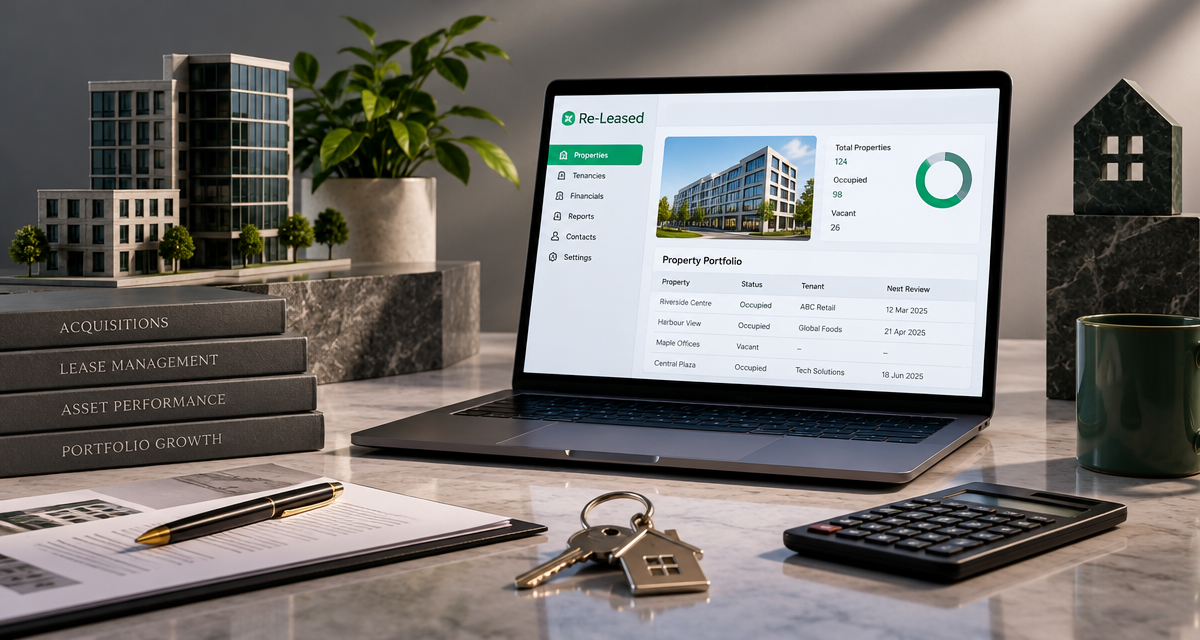
Re-Leased Review: What to Check Before Moving Your Property Portfolio
Re-Leased has taken a prominent position in commercial property management software, promising powerful automation, workflows, and reporting tools. This article presents a critical, business-focused re leased review tailored for portfolio owners, asset managers and finance leaders—particularly those operating in Singapore or other advanced, regulation-heavy APAC environments. Below, we analyze how Re-Leased matches up to nuanced, practical commercial property management requirements, what hidden costs or technical hurdles must be anticipated, and where it stands compared to other platforms for complex international portfolios.
Define Your Commercial Property Management Requirements
Before evaluating the Re-Leased platform, organizations must establish a rigorous, granular list of their unique property management needs. Commercial portfolios are highly heterogeneous: requirements for a Singapore office tower operator with multinational tenants differ drastically from those of a regional retail landlord.
Core requirements to clarify include:
- Portfolio scale and asset classes (offices, retail, industrial, mixed-use, etc.)
- Number of active leases and expected future growth
- Required compliance workflows (e.g., Singapore GST, IFRS 16 reporting, local safety regulations)
- Complexity of lease terms (break clauses, stepped rent, turnover rent, variable outgoings)
- Degree of tenant engagement (self-service portals, communications, maintenance requests)
- Accounting and reporting granularity (cash flow forecasting, service charge reconciliations, custom ledger mappings)
- Integration needs with CRM, ERP, payment gateways, and/or facilities management platforms
Organizations with legacy platforms (MRI, Yardi, Buildium) must also map required data schemas, establish reporting expectations, and list manual “shadow systems” (spreadsheets or custom tools) that a new platform must absorb or improve upon. Defining these requirements provides the baseline for evaluating whether Re-Leased’s out-of-the-box features, customization capabilities, and integration points will reduce—rather than amplify—organizational technical debt.
Assess Fit for Singapore Property Teams
Singapore’s commercial real estate market is shaped by strict regulatory compliance (URA requirements, GST), high proportions of multinational tenants, and unique lease structures (rent review mechanisms, currency fluctuation clauses, etc.). Properly vetting a SaaS platform for this environment requires a critical look at:
- Localization for Singapore (date formats, address fields, bank validation, legal templates)
- Support for Singapore’s GST workflows, including automated tax calculation on rents, service charges, and late fees
- Automated production of government-mandated reports (IRAS, Statutory Lease Registration, URA returns)
- Currency management—particularly the ability to handle multi-currency leases, consolidation, and reporting for foreign landlords and tenants
- Provision of time zone-aware scheduling, automated reminders for Singapore working hours, and support teams operating in local business hours
Technical friction appears when the software’s core data model is designed for Western markets and only “skins” localization rather than deeply embedding it into billing, reporting, and workflow engines. For example, GST handling may rely on manual workarounds or complicated mapping tables, which can break down during upgrades or as regulations shift. Singapore-focused property managers should demand proof of regulatory, currency, and lease structure support “in the workflow,” not just in dashboards or exported spreadsheets.
Evaluate Lease Records and Critical Date Tracking
Commercial portfolios live and die by the accuracy and completeness of their lease data. In this re leased review segment, we unpack whether the platform supports:
- Granular lease record fields: rent steps, turnover rent, indexed increases, service charge caps, break rights
- Automated tracking of critical dates—rent reviews, expirations, renewals, options, break deadlines, insurance lapses
- Audit trails on lease amendments and notifications sent to asset managers and tenants
Most competing platforms (including Yardi and MRI) have battle-tested lease abstraction engines, but some SaaS entrants—Re-Leased included—may simplify or omit edge cases important in complex APAC leases (e.g., “make good” provisions, rolling renewal rights, multiple occupants per space with distinct rents). Look for:
- Configurable lease templates (to handle Singaporean and multi-national contracts)
- Flexible date-triggered workflows (e.g., send certified letter 90 days before expiry, queue for legal review 120 days before rent review)
If critical dates and fields require clumsy workarounds or additional manual tracking (especially for non-standard terms prevalent in Singapore leases), expect reduced efficiency and increased operational risk.
Review Billing and Accounting Integration Requirements
Financial management is the backbone of any commercial property management stack. Re-Leased promises native integration with cloud accounting platforms like Xero and QuickBooks, but deeper business requirements often expose technical friction points:
- Are service charges, utilities, and ad hoc billable items supported on the invoice at line-item granularity?
- Can accounts be mapped to custom chart of accounts structures used by local auditors or parent accounting systems?
- How are rent receipts, arrears, and late interest postings reconciled automatically—and how does the system handle partial payments or foreign currency variances?
For portfolios using ERP suites (SAP, Oracle) or local accounting packages, API documentation must be reviewed for:
- One-way vs. bi-directional data sync
- Batch posting, error handling, and API rate limits
- Preservation of audit trails and statutory compliance in posted transactions (especially for cross-border audits)
Organizations operating in Singapore must verify GST accounting workflows—can the solution automatically post GST on mixed income and expense items, and generate compliant GST reports and payment instructions? Beware of platforms that treat accounting integration as an “afterthought,” requiring manual reconciliation or introducing breaks in the data lineage required for external audit.
Examine Maintenance and Tenant Workflows
Best-in-class modern property management solutions streamline maintenance dispatch and empower tenants to trigger and track work orders. In evaluating Re-Leased’s workflow engine—particularly its tenant portal—focus on:
- Customizability of maintenance workflows (triage, escalations, approvals)
- Integration with facilities management or contractor platforms
- Automated notifications, service level tracking, and vendor performance reporting
- Multi-language support for tenants, with localization for Singaporean English, Mandarin, Malay, and Tamil if required
Tenant engagement is where workflow “looks good in a demo” but can fail at scale: for example, if tenants submit requests via email or WhatsApp, does Re-Leased centralize, parse, and assign these efficiently? How easy is it to onboard new vendors and ensure that procurement compliance is maintained?
Look for API access or at minimum a robust import/export feature, as many large portfolios need to integrate tenant requests with existing Helpdesk or FM tools (e.g., FM:Systems, Planon). Emerging expectations—including IoT monitoring, maintenance forecasting, and predictive analytics—are only suited to platforms with robust, extensible APIs and transparent data schemas, areas where closed SaaS solutions can lag.
Check Permissions and Portfolio Reporting
Robust permissioning and comprehensive reporting determine whether the platform supports institutional multi-stakeholder environments or remains suited to “mom-and-pop” landlords. Analyze whether Re-Leased supports:
- Granular, role-based access for onshore and offshore teams (property managers, finance, accounting, auditors, maintenance personnel)
- Segmentation by property group, country, or investor (crucial for multi-portfolio or cross-border operators)
- Flexible, drill-down reporting on arrears, occupancy, cashflow, arrears aging, maintenance response times, and compliance metrics
- Custom report builders vs. fixed, vendor-defined dashboards
Hidden trade-offs often emerge: pre-built dashboards enable fast onboarding but may miss key investor or regulatory metrics, while customizable reporting engines may require time-consuming configuration and specialist support. Audit trails must satisfy both internal and external reviewers, logging not just data entry but access and modification histories—especially for regulated environments like Singapore’s listed REITs.
Software that lacks flexible permissioning or enforces excessively broad access (e.g., everyone can see every lease or invoice) raises security, compliance, and data privacy risks. This is particularly sensitive when managing portfolios for multiple ownership entities or JV structures.
Plan Data Migration and Reconciliation
Moving to Re-Leased from legacy platforms or spreadsheets is typically the single largest technical hurdle, especially for mature portfolio owners. Critical points in the migration phase include:
- Available migration tools: built-in wizards, manual CSV import, or dedicated data migration services
- Handling of legacy lease structures—can all key data (e.g., stepped rents, historic adjustments, expired leases for audit) be cleanly mapped?
- Validation, testing, and reconciliation of migrated data: automated error checks, side-by-side reporting with legacy systems
- Duration of blackout or dual-running periods during the switch-over
- Level of vendor support included in onboarding (consultant-led vs. self-service)
Migration complexity scales with portfolio history. For instance, a firm switching from Yardi may face schema mismatches and data format inconsistencies—invoicing rules, historic payment records, incomplete owner data. Mature SaaS vendors offer white-glove migration (at significant cost), whereas basic self-service tools may handle only “happy path” leases and simple rent billing.
Failure to reconcile historical billing (including splits for arrears, credits, or multi-party arrangements) can impact compliance, financial audits, and tenant trust. Mature organizations should build their own parallel reporting and auditing pipeline for the first two billing cycles after go-live.
Verify Local Currency and Tax Handling Requirements
Singapore landlords often deal in S$, but multi-national portfolios require robust support for multiple currencies (SGD, USD, EUR, GBP) and automated FX rate management for cross-border contracts. Assess how the software handles:
- Multi-currency leases, invoice generation, and receipt posting
- Automated conversion and consolidation for group-level reporting
- Integration with reliable FX feeds or manual override for contract-specific FX rates
- Automated tax workflows, especially handling Singapore’s GST (currently 9%), including apportionment on mixed-use property
- Preparation of GST return reports, validation, and electronic submission to IRAS
Caution: Some SaaS solutions require workarounds for mid-lease currency shifts or for complex scenarios such as billing in foreign currency but settling in SGD. If Singapore GST rules change (as they have, repeatedly, in recent years), platform agility and responsiveness become critical. Inquire about vendor release schedules and patching for sudden legislative shifts.
Calculate Subscription and Onboarding Costs
Transparent, predictable cost structures are essential for ROI assessment. The following table breaks down core pricing variables:
| Re-Leased Subscription Tier | Typical Monthly Cost (SGD, 2024) |
Portfolio Size Target | User Seat Limits | Key Included Features | Setup/Onboarding Fees | API/Integration Notes | Notable Exclusions |
|---|---|---|---|---|---|---|---|
| Essential | $650–$1,300 | 1–10 properties | Up to 5 | Lease tracking, basic invoicing, standard reports | $500–$2,000 | Limited; mainly accounting software | Custom fields, advanced reporting, deep ERP integration |
| Professional | $1,300–$3,000 | 11–50 properties | Up to 15 | Full work order mgmt., document automation, user permissions | $2,000–$8,000 | Broader API, external FM platforms | Legacy system migration, advanced analytics toolkit |
| Enterprise | $3,000+/custom | 50+ properties | Unlimited | Custom reporting, tailored onboarding, SSO, SAML, SLA support | $8,000–$25,000+ | Custom RESTful API, batch feeds, audit reporting | IoT device integrations, bespoke lease abstraction |
Beware of per-seat pricing that escalates with property manager or back-office user additions—not just number of properties. Migration and configuration services are typically quoted separately, and ongoing API access may carry premium pricing. Factor in internal costs for project management and stakeholder training, as well as potential parallel running requirements due to reconciliation or regulatory sign-off timelines.
Final Verdict
This re leased review finds Re-Leased a credible, rapidly maturing platform for commercial property managers seeking automation and cloud-native accessibility. It outshines many legacy on-premises systems by offering bank-level security, mobile-first UX, and real-time portfolio health data. For Singapore—where local regulatory complexity is high—Re-Leased’s benefits are substantial only if teams commit to deep process mapping, thorough data migration, and proactive vendor management to address edge-case localization.
Strengths:
- Sleek, intuitive UI and highly active development roadmap
- Solid integration with mainstream cloud accounting tools
- Effective landlord/tenant portals with easy self-service access
- Scales well from boutique portfolios to large enterprise teams
Trade-offs and challenges:
- Bespoke Singapore compliance workflows may require custom configuration or third-party middleware
- Technical friction with legacy system migration, especially with complex lease histories
- Potential gaps for advanced analytics, deep customization, and edge cases (e.g., mid-lease currency switches, legacy service charge reconciliations)
- Premium integration or customization features may move total cost above older on-prem options
For mid-size to larger portfolios—especially REITs and international landlords—Re-Leased deserves a seat at the table during system evaluations. However, teams must budget significant process engineering for Singapore localization and expect parallel running during rollout. Portfolio owners with the need for deepest customization, or those with highly regulated or legacy-heavy stacks, may still require hybrid architectures or specialist toolkits beyond the Re-Leased SaaS core.