Local Provider or Global Platform? Choosing Cloud Security Support in Singapore
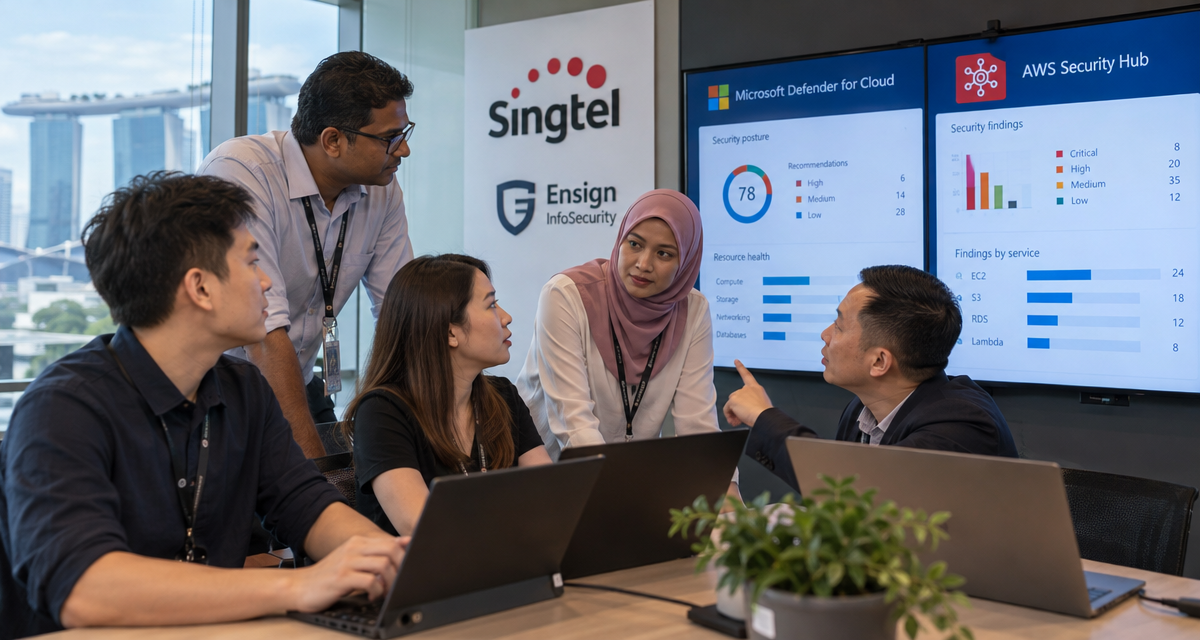
As Singaporean enterprises accelerate their cloud adoption, the decision between local service providers and global security platforms is no longer academic. SME and enterprise CTOs evaluating cloud security providers Singapore must scrutinize integration depth, response guarantees, operating models, and the real impact of native versus managed security. This exhaustive guide will dissect both local heavyweights like Singtel and Ensign InfoSecurity, alongside global platforms such as Microsoft Defender for Cloud and AWS Security Hub, focusing on every technical, operational, and economic angle relevant to Singapore-based businesses.
Separate Service Providers From Cloud Security Platforms
The term “cloud security providers Singapore” spans two fundamentally different approaches: managed security service providers (MSSPs) and do-it-yourself (DIY) cloud-native platforms. The distinction is not academic—both impact API integrations, customization, dashboard visibility, and liability in different ways.
Technical Friction & Integration Challenges
- Singtel & Ensign InfoSecurity: Typically connect via agent-based deployment or custom-built APIs to both cloud and on-premises infrastructure. There is often a 2-6 week onboarding timeline due to requirements gathering, security baselining, and documentation handover. Integration with modern SaaS stacks (e.g., Salesforce, Workday) may need paid custom connectors or middleware.
- Microsoft Defender for Cloud & AWS Security Hub: API-level native integration with their respective clouds. Multi-cloud connectivity (e.g., connecting AWS Security Hub to Azure workloads) requires bridge configurations, third-party tools, and advanced role-based access workflows—creating additional operational drag.
Granular Feature Teardowns
- Managed Providers: Deliver aggregated dashboards unified across hybrid stacks, custom playbooks for incident response, ticketing integrations (e.g., with ServiceNow), and 24/7 SOC analyst triage—that DIY platforms can’t match.
- Cloud Platforms: Expose fine-grained policy definitions, automated compliance drift reporting, and cloud event-driven remediation triggers (e.g., auto-disable public S3 buckets). However, user workflow is limited to what the platform supports.
The Hidden Trade-Offs
- Managed Service Ease vs. Control: Offloading risk to a provider can mean slower change management and less access to raw data and event logs. Building with a platform gives fine control, but your team absorbs all incident response responsibility.
Future-Proofing Analysis
- AI and Automation: Global platforms are rolling out AI-driven anomaly detection and zero-trust posture management by default. Local providers are investing in AI triage and regional compliance (PDPA, MAS TRM) but lag in software automation speed.
Identify Support Gaps in SME IT Teams
Most Singaporean SMEs lack a specialized security operations team. The skill gap is apparent during onboarding and daily incident response with cloud security providers Singapore.
Technical Friction & Integration Issues
- SMEs deploying Microsoft Defender for Cloud: Often overwhelmed by policy templates, RBAC configuration, and multitenant alert volumes. Integrating endpoint, cloud, and DLP telemetry requires steep learning curves.
- Managed support (Singtel/Ensign): Reduces friction by handling technical mapping, but custom use cases (e.g., cloud-to-ERP workflows) are often limited to what the provider’s SOP and escalation matrix supports.
Feature Teardown: User Workflow & Reporting
- Global Platforms: Self-service dashboards offer granular event logs, but can overwhelm with volume. BI integration (e.g., PowerBI export from Defender) is possible but rarely plug-and-play for SMEs.
- Managed Providers: Deliver executive summary reports and KPI-driven dashboards, but typically lack direct raw data export due to SLA and data residency constraints.
Hidden Trade-Offs
- Choosing managed support replaces technical knowledge demands with process dependency and response time SLAs. DIY platforms demand longer skill ramp and ongoing upskilling for the internal team.
Future-Proofing
- Generative AI assistants and low/no-code security orchestration are being embedded in platforms. SMEs choosing DIY platforms should prioritize those with built-in learning tools and local training partners.
Evaluate Native Cloud Controls Before Adding Tools
Before layering external solutions on AWS or Azure, Singapore businesses must check if built-in features already cover compliance and risk scenarios. Not all cloud security providers Singapore add unique value.
Technical Friction & Real-World Limitations
- Cloud-Native Controls: Defender for Cloud can enforce CIS benchmarks, identity hygiene, and vulnerability assessment for IaaS/PaaS. AWS Security Hub aggregates GuardDuty, Inspector, and config findings. But out-of-the-box coverage is limited for specialized or legacy SaaS.
- Layering 3rd Party Tools: Adding EDR, SIEM, or dedicated CASB often means dealing with duplicated alerts, connector onboarding, and API rate limits. Total deployment timelines can extend by 4-8 weeks with extensive UAT cycles.
Feature Teardown: Automation & Reporting
- Native Solutions: Automated policy enforcement and alerts are limited to supported services. Cross-cloud or on-prem integration requires add-ons or custom API ingestion.
- Third-Party Tools: Provide advanced analytics and custom reporting, but at the cost of additional connectors, agent maintenance, and sometimes loss of warranty/support from the cloud vendor for unsupported configurations.
Hidden Trade-Offs
- Relying on Native: Saves cost, but can leave blind spots for multi-cloud and hybrid scenarios. Add-ons close gaps, but escalate costs and operational overhead.
Future-Proofing
- Major platforms are expanding cross-cloud and SaaS posture management (e.g., Microsoft’s multi-cloud connector). Expect tighter API security integration and “no-agent” compliance drift detection in the coming year.
Assess the Value of Local Managed Support
Singapore-based managed security service providers offer localized advisory, compliance alignment (e.g., PDPA, MAS TRM), and incident response tailored to region-specific threats. How do they stack up against automated, DIY security platforms?
Technical Friction
- Managed Providers: Handle compliance mapping, integration with local audit requirements, and demand less in-house security engineering. However, onboarding into existing ITSM, Azure/AWS cloud stacks often requires “translation” layers—extending project lead times.
- Global Platforms: Less aware of regional mandates; require custom playbooks for local regulatory controls.
Granular Feature Teardown
- Ticketing & Workflow: Local providers typically sync with customer ITSM (ServiceNow, Jira) for issue management; however, custom workflow automations are usually pre-defined or come with substantial SOW charges.
- Reporting: Most managed options provide scheduled, localized reporting formats (e.g., mapping to Singapore’s Cybersecurity Act or MAS TRM) — out-of-the-box, major platforms don’t offer these templates natively.
Hidden Trade-Offs
- Local Support: Ensures faster on-site response and regulatory fluency, but can mean less scalability, fewer API automations, and potential tool lag behind global updates.
Future-Proofing
- AI-driven compliance mapping and localized threat feeds are in active development, but current managed services still rely on human analysts for contextual response—a difference that may close as platforms automate more (targeting 12-24 months).
Compare Response Ownership and Operating Hours
When issues arise, “owned response” is the core differentiator between hands-off MSSPs and deploy-your-own platforms. Singapore CIOs and CISOs must match their risk appetite and staffing to the variance in incident management.
Technical Friction: Response Flow Examples
- Managed Providers (Singtel/Ensign): 24/7 SOC with guaranteed call/onsite response. Incident escalations route through their team, with client approval/notification steps. Some restrict automation—complex COVID-19-era remote incident handling is still not “one-click”.
- Global Platforms: Real-time threats and alerts surface in dashboard; customer IT ops must coordinate triage, forensics, and remediation, often outside business hours unless a dedicated NOC/SOC exists internally.
Feature Teardown: Ownership
- SLA Metrics: Managed providers promise 15-30 minute first response (critical), while platforms only offer service uptime SLA, not operational incident response.
- Automation: Global tools support basic auto-remediation triggers (e.g., disconnecting a compromised host); deeper playbooks for nuanced scenarios must be built internally or procured from a marketplace.
Hidden Trade-Offs
- Managed Service: Less direct technical ownership, but faster, more consistent response. Internal teams must trade sleep for round-the-clock vigilance unless they invest heavily in automation—or risk missed breaches.
Future-Proofing
- Expect SaaS platforms to embed more “AI playbooks” to close the response gap without human shift work, but truly local incident context (language, local police notification) will remain a differentiator for regional providers in the near term.
Review Integration and Data Access Requirements
Integration friction and data sovereignty are not afterthoughts. The ability to ingest logs from legacy ERPs, maintain low-latency event flows, and guarantee Singapore-resident data processing is pivotal in choosing cloud security providers Singapore.
Technical Friction: Connectors and Data Residency
- Managed Providers: Offer broader support for local, hybrid, and legacy systems via agent-based ingestion. However, bi-directional integrations (e.g., pushing events back into customer SIEM) are often slow to provision and may incur extra consulting costs.
- Global Platforms: Ultra-fast onboarding to supported cloud stacks; limited to their own environments unless 3rd-party open connectors or expensive “cloud-to-cloud” brokers are deployed.
Feature Teardown: Data Access and Reporting
- Local Providers: Custom dashboarding with local compliance mapping, but restrictive export capabilities to avoid violating MAS and PDPA guidelines.
- Cloud Platforms: Deep log export (often with “bring-your-own-SIEM” integrations) but may process or replicate data in global zones by default, creating compliance and latency risks.
Hidden Trade-Offs
- Managed Service: Guarantees regulatory alignment and hand-holding for legacy system integration but may slow business agility during IT transformation.
Future-Proofing
- Major platforms now offer “Singapore region” data residency guarantees, but APIs for legacy data sources remain a gap. Expect cloud-native connectors to improve, especially with AI-driven data mapping and normalization, by 2025.
Calculate Software and Service Costs Together
Many Singaporean businesses underbudget by focusing only on license fees. True cost comparisons of cloud security providers Singapore must total software, implementation, support, and ongoing management spend.
Technical Friction: Procurement and Cost Management
- Managed Providers: Offer “as-a-Service” monthly/annual bundles. Costs are often opaque, with escalation/event thresholds that trigger extra SOWs. Unexpected overtime, on-prem site visits, and change requests inflate TCO.
- Global Platforms: Package user/device-based pricing, plus separate egress, storage, and optional support fees (e.g., Microsoft Premier/Unified). Integrating 3rd-party analytics, advanced SOAR, or connectors adds stacking costs.
Feature Teardown: Expense Transparency
- Local Managed Packages: Typically fixed-fee, but custom incident, change management, or bespoke training incur hourly rates.
- DIY Platforms: Consumption-based fees can surprise at scale—especially with high log ingestion and cross-region data movement.
Hidden Trade-Offs
- Managed Service: Predictable finance, but hidden “overage” risks. DIY: Difficult for finance to predict until workload size and response volume stabilize, but can tweak cost in real time.
Future-Proofing
- Look for increased “all-in-one” pricing from local providers and simplified cross-cloud billing from platforms over the next 12-18 months, including AI-based cost predictability features.
Assess Vendor Dependence and Exit Options
Choosing the wrong cloud security providers Singapore can mean long-term lock-in, proprietary workflows, and complex migration outlays. Strategic diligence here avoids painful, costly reversals.
Technical Friction: Vendor Lock-In
- Managed Providers: Intellectual property (playbooks, incident runbooks) may not be portable. Raw event data sometimes provided only on client request, risking incomplete history if transitioning.
- Global Platforms: Deep integration with the cloud vendor leads to “sticky” dependencies (e.g., Azure Conditional Access policies). Breaking out demands manual policy replication and data migration—which can be laborious and error-prone.
Feature Teardown: Exit Pathways
- Contractual Terms: Most managed service contracts in Singapore are 12-36 Months. Early exit often triggers penalties and extended support wind-downs.
- DIY Platforms: Monthly/annual options but deep service wiring into productivity suites (O365, Teams, AWS Workspaces) complicates clean migration.
Hidden Trade-Offs
- Freedom vs. Portability: Managed providers may be inflexible on exit, but offer clearer handover. Native platforms are easy to spin down, but leave “security gaps” if no replacement process is built before migration.
Future-Proofing
- Expect growing support for open standards (OpenC2, STIX, TAXII) and “bring your own retention” policies from both managed and global providers by late 2025, reducing lock-in risk.
Choose an Internal or Managed Operating Model
The last and most critical inflection: cloud security providers Singapore come down to a choice between internalizing security (and training, staffing, incident sleeplessness) or outsourcing entirely to a managed provider. Neither model is “futureproof” for all organizations; hybrid models often emerge as the reality.
Technical Friction: Building Security Operations
- Internal Model: Requires recruiting/retaining cybersecurity staff, standing up monitoring/alerting infrastructure, and continuously tuning analytics and playbooks. First-year hiring and tooling costs can top S$500,000 for a mid-sized Singapore enterprise.
- Managed Model: Lower upfront investment, faster operational readiness, but technical “distance” often means slower agility for configuration tweaks and advanced reporting demands.
Feature Teardown: Day-in-the-Life and Capabilities
- Internal Teams: Have instant access to logs, incident data, and root privileges where necessary. Internal runbooks may be more agile but are only as robust as the team’s experience and capacity.
- Managed Teams: Deliver standardized response, periodic reviews, and documentation, but may resist “out-of-template” scenarios without new contracts or escalation reviews.
Hidden Trade-Offs
- Internal Ownership: Delivers control, but is expensive and talent-intensive. Managed support lowers entry friction but creates dependency and slower change velocity. Most mature organizations combine daily monitoring internally with external escalation on high-severity items.
Future-Proofing
- Look for hybrid delivery models—where managed providers co-pilot with internal teams, leveraging AI triage, SaaS-based SIEM, and zero-trust APIs, to gain control and responsiveness without over-staffing or incurring hidden downtime.
Provider Comparison Table
| Provider/Platform | Best For | Integration Method | Compliance/Local Support | Incident Response Ownership | Pricing Model | Exit Flexibility | AI/Future Readiness |
|---|---|---|---|---|---|---|---|
| Singtel | Regulated, large/medium enterprises needing local compliance/expert support | Custom API, agent-based, manual onboarding | PDPA, MAS compliance; local support & on-site response | Provider-owned, 24/7 SOC, escalation | Fixed monthly, SOW for custom work | Multi-year contracts, heavy onboarding | AI roadmap emerging, manual-driven now |
| Ensign InfoSecurity | Aggressive, high-risk businesses needing proactive detection and threat intelligence | Direct connectors, legacy/SaaS support | Strong regional compliance and threat maps | Provider-owned, tailored runbooks | Subscription, event-based overages | Standard 12/24/36-month, moderate lock-in | Actively integrating AI early warning |
| Microsoft Defender for Cloud | MS Azure-centric enterprises, with strong internal IT/security ops | API, Azure Portal, native analytics | CIS, ISO, partial Singapore mapping | Customer-owned; self-managed triage | User/device, consumption-based | Month-to-month, complex data egress | Rapid AI/ML rollout, rich automation |
| AWS Security Hub | AWS-centric, multi-account cloud environments | API, CloudFormation, integration with native AWS services | CIS, PCI, little/no explicit SG support | Customer-owned; must build triage SOPs | Consumption + storage/analytics add-ons | Highly flexible; easy on/off | Fastest cloud AI/security adoption |
Summary: Choosing the Right Model for Your Organization
Selecting among cloud security providers Singapore-based enterprises face is not a one-size affair. For heavily regulated, risk-averse industries, local managed providers bring operational assurance and fast response, albeit at the cost of flexibility and innovation speed. For digital-native, cloud-first businesses with mature IT/security operations, global platforms empower automation, cost optimization, and innovation but demand strong in-house expertise and a willingness to own risk. Most hybrid organizations benefit from combining rapid-response managed support for critical assets with DIY automation for day-to-day cloud resources—a model most likely to remain resilient as AI, compliance, and integration demands rapidly evolve through 2025.